
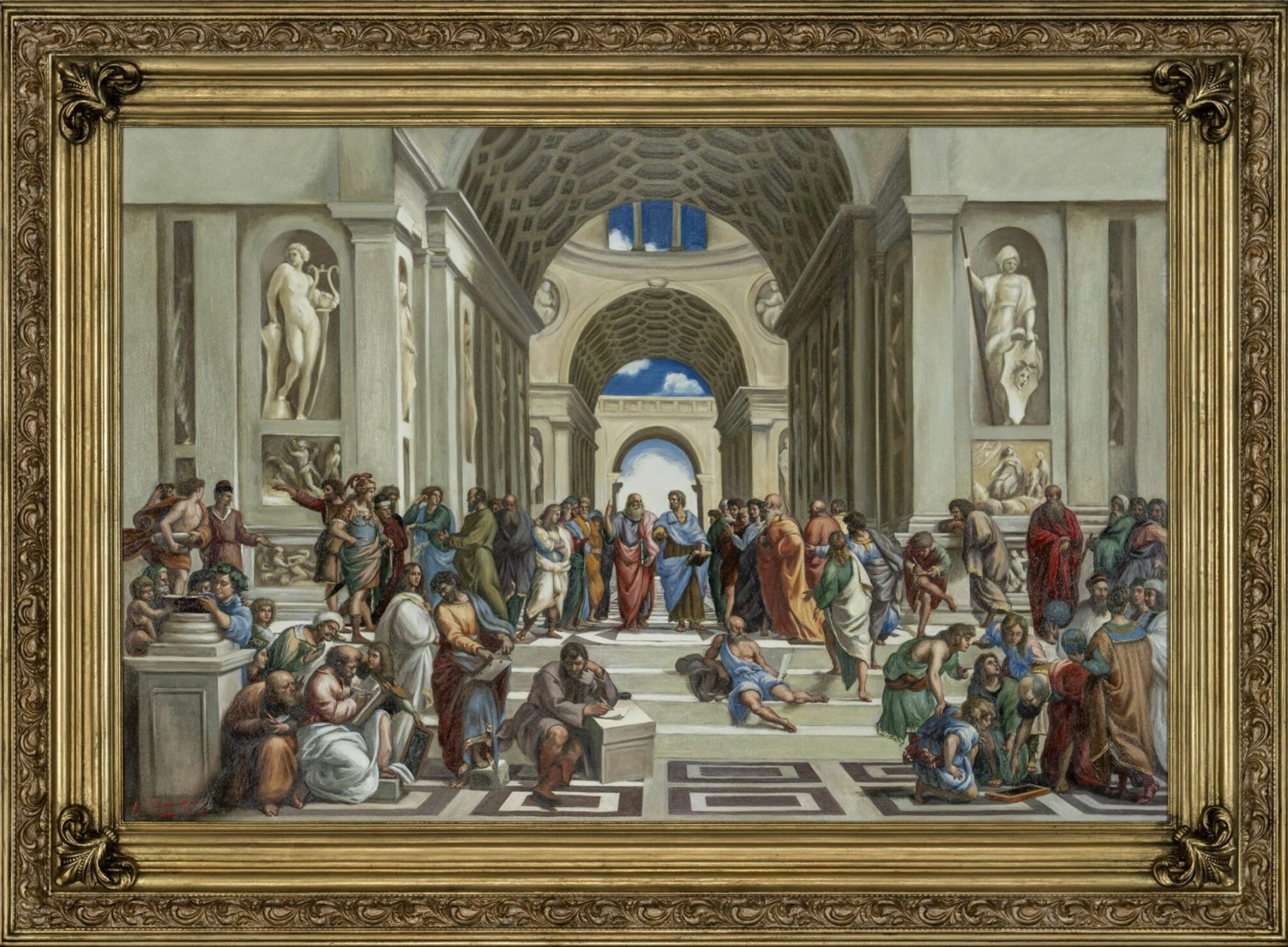
Elle Xenon (490-430 LL)
The Greek Philosopher from the philosophical school of Ilya,
He was known to defend the ideas of Parmendez.
About the unity and persistence of existence.
I'm fascinated by Xenon's paradox like Achille.
And the turtle that aims to show contradictions.
Reason in the concept of movement and pluralism.
The Greek Philosopher from the philosophical school of Ilya,
He was known to defend the ideas of Parmendez.
About the unity and persistence of existence.
I'm fascinated by Xenon's paradox like Achille.
And the turtle that aims to show contradictions.
Reason in the concept of movement and pluralism.
Ibn Rushd (Averroes) (1126–1198 CE)
An Andalusian philosopher, jurist, and physician,
Ibn Rushd was a leading advocate of rational inquiry within the Islamic intellectual tradition.
It had a big influence on philosophical thinking. In his writings, he argued for the harmony between philosophy and religion, affirming the compatibility of reason and faith.
Renowned for his extensive commentaries on Aristotle, his work profoundly influenced later philosophical thought in medieval Europe.
An Andalusian philosopher, jurist, and physician,
Ibn Rushd was a leading advocate of rational inquiry within the Islamic intellectual tradition.
It had a big influence on philosophical thinking. In his writings, he argued for the harmony between philosophy and religion, affirming the compatibility of reason and faith.
Renowned for his extensive commentaries on Aristotle, his work profoundly influenced later philosophical thought in medieval Europe.
Aykhinees (fourth century S.M.)
A Greek philosopher of Socrates,
His name was linked to the Socratic tradition that focused on ethics.
The philosophical dialogue and the transfer of Socrates ideas through dialogues.
A Greek philosopher of Socrates,
His name was linked to the Socratic tradition that focused on ethics.
The philosophical dialogue and the transfer of Socrates ideas through dialogues.
Antistinis (445 - 365 LL)
A Greek philosopher and a Socrates student,
It is a first founder of dog philosophy.
He called for the life of the arrogance and independence from material desires,
Confirmed that virtue alone is happiness.
A Greek philosopher and a Socrates student,
It is a first founder of dog philosophy.
He called for the life of the arrogance and independence from material desires,
Confirmed that virtue alone is happiness.
Socrates (469-399 LL)
The Greek Philosopher is a founder of moral philosophy in the West.
Define the bureaucratic way of asking questions.
To get to real knowledge and reveal intellectual contradictions.
The Greek Philosopher is a founder of moral philosophy in the West.
Define the bureaucratic way of asking questions.
To get to real knowledge and reveal intellectual contradictions.
Ebekhor (341–270 LL)
The Greek Philosopher is the foundation of the Apisode school.
She thought happiness was achieved by moderation and tranquillity.
Stay away from pain and fear.
The Greek Philosopher is the foundation of the Apisode school.
She thought happiness was achieved by moderation and tranquillity.
Stay away from pain and fear.
Antsimander (610-546 LL)
Philosoph from Miles School suggested the origin of the universe.
It's unfinished. «The Bryan.»Oh, my God.
It is the first principle from which all things arise.
Philosoph from Miles School suggested the origin of the universe.
It's unfinished. «The Bryan.»Oh, my God.
It is the first principle from which all things arise.
Anksagoras (500-428 LL)
Greek Philosopher introduced a concept. «The cosmic mind.»Oh, my God.
As the power of the universe,
The system and order shall be accorded to all assets.
Greek Philosopher introduced a concept. «The cosmic mind.»Oh, my God.
As the power of the universe,
The system and order shall be accorded to all assets.
Vythagoras (570–495 LL)
Philosoph and Greek athlete saw the numbers represent
Infrastructure of the universe,
The cosmic system could be understood through sports relations.
Philosoph and Greek athlete saw the numbers represent
Infrastructure of the universe,
The cosmic system could be understood through sports relations.
Hibatia (355-415m)
Mathematician and philosopher of Alexandria,
And she's one of the most prominent women in the history of old science,
I knew about philosophy and mathematics.
Mathematician and philosopher of Alexandria,
And she's one of the most prominent women in the history of old science,
I knew about philosophy and mathematics.
Barmendes (515-450 LL)
The Greek Philosopher confirmed that real reality is constant and unchanging,
The change we recognize in sense is only illusion.
The Greek Philosopher confirmed that real reality is constant and unchanging,
The change we recognize in sense is only illusion.
Heraldites (535-475 LL)
The Greek Philosopher saw the universe in a state of permanent change.
He stated: «You can't go down the river twice.»I'm sorry.
The Greek Philosopher saw the universe in a state of permanent change.
He stated: «You can't go down the river twice.»I'm sorry.
Diojin (412-323 LL)
The Greek Philosopher from the dog school called for a simple life.
Free of social welfare and rejection of artificial customs.
The Greek Philosopher from the dog school called for a simple life.
Free of social welfare and rejection of artificial customs.
Platoon (427-347 LL)
A Greek philosopher and a Socrates student,
Founder of the Athens Academy,
I'm familiar with the theory of the ideal that you see the whole truth.
It's in the world of ideas.
A Greek philosopher and a Socrates student,
Founder of the Athens Academy,
I'm familiar with the theory of the ideal that you see the whole truth.
It's in the world of ideas.
Aristotle (384-232 LL)
Philosoph, Greek world, and Platon student,
Make wide contributions to reason and morality.
Natural science is based on observation and experience.
Philosoph, Greek world, and Platon student,
Make wide contributions to reason and morality.
Natural science is based on observation and experience.
Hospital followers.
A philosophical school connected to Arastoo and his students,
Based on logical analysis and nature study
Knowledge through observation and mind.
A philosophical school connected to Arastoo and his students,
Based on logical analysis and nature study
Knowledge through observation and mind.
Avelutin (204270-mm)
The Greek Philosopher and the founder of the modern philosophy,
Present a metaphysical concept based on principle. «One.»
From which all assets emerge.
The Greek Philosopher and the founder of the modern philosophy,
Present a metaphysical concept based on principle. «One.»
From which all assets emerge.
Zaradst (Sixth Century)
A religious thinker from the old Persian country linked his name.
With the establishment of the Zoradic religion,
Which is based on the idea of a moral conflict between good and evil,
It stresses the importance of moral choice in human life.
A religious thinker from the old Persian country linked his name.
With the establishment of the Zoradic religion,
Which is based on the idea of a moral conflict between good and evil,
It stresses the importance of moral choice in human life.
IQ (approximately 300 m)
A Greek mathematician known as the engineering father.
And a bookkeeper. «Components» Which became the core reference.
To study engineering for centuries and establish a sports proof curriculum.
A Greek mathematician known as the engineering father.
And a bookkeeper. «Components» Which became the core reference.
To study engineering for centuries and establish a sports proof curriculum.
Champos (100-170m)
An astronomy world and a Greek-Egyptian geography developed the model of the universe.
Who puts the earth in his center,
This model has had a major effect on astronomy.
For centuries.
An astronomy world and a Greek-Egyptian geography developed the model of the universe.
Who puts the earth in his center,
This model has had a major effect on astronomy.
For centuries.
Elle Xenon (490-430 LL)
The Greek Philosopher from the philosophical school of Ilya,
He was known to defend the ideas of Parmendez.
About the unity and persistence of existence.
I'm fascinated by Xenon's paradox like Achille.
And the turtle that aims to show contradictions.
Reason in the concept of movement and pluralism.
The Greek Philosopher from the philosophical school of Ilya,
He was known to defend the ideas of Parmendez.
About the unity and persistence of existence.
I'm fascinated by Xenon's paradox like Achille.
And the turtle that aims to show contradictions.
Reason in the concept of movement and pluralism.
Ibn Rushd (Averroes) (1126–1198 CE)
An Andalusian philosopher, jurist, and physician,
Ibn Rushd was a leading advocate of rational inquiry within the Islamic intellectual tradition.
It had a big influence on philosophical thinking. In his writings, he argued for the harmony between philosophy and religion, affirming the compatibility of reason and faith.
Renowned for his extensive commentaries on Aristotle, his work profoundly influenced later philosophical thought in medieval Europe.
An Andalusian philosopher, jurist, and physician,
Ibn Rushd was a leading advocate of rational inquiry within the Islamic intellectual tradition.
It had a big influence on philosophical thinking. In his writings, he argued for the harmony between philosophy and religion, affirming the compatibility of reason and faith.
Renowned for his extensive commentaries on Aristotle, his work profoundly influenced later philosophical thought in medieval Europe.
Aykhinees (fourth century S.M.)
A Greek philosopher of Socrates,
His name was linked to the Socratic tradition that focused on ethics.
The philosophical dialogue and the transfer of Socrates ideas through dialogues.
A Greek philosopher of Socrates,
His name was linked to the Socratic tradition that focused on ethics.
The philosophical dialogue and the transfer of Socrates ideas through dialogues.
Antistinis (445 - 365 LL)
A Greek philosopher and a Socrates student,
It is a first founder of dog philosophy.
He called for the life of the arrogance and independence from material desires,
Confirmed that virtue alone is happiness.
A Greek philosopher and a Socrates student,
It is a first founder of dog philosophy.
He called for the life of the arrogance and independence from material desires,
Confirmed that virtue alone is happiness.
Socrates (469-399 LL)
The Greek Philosopher is a founder of moral philosophy in the West.
Define the bureaucratic way of asking questions.
To get to real knowledge and reveal intellectual contradictions.
The Greek Philosopher is a founder of moral philosophy in the West.
Define the bureaucratic way of asking questions.
To get to real knowledge and reveal intellectual contradictions.
Ebekhor (341–270 LL)
The Greek Philosopher is the foundation of the Apisode school.
She thought happiness was achieved by moderation and tranquillity.
Stay away from pain and fear.
The Greek Philosopher is the foundation of the Apisode school.
She thought happiness was achieved by moderation and tranquillity.
Stay away from pain and fear.
Antsimander (610-546 LL)
Philosoph from Miles School suggested the origin of the universe.
It's unfinished. «The Bryan.»Oh, my God.
It is the first principle from which all things arise.
Philosoph from Miles School suggested the origin of the universe.
It's unfinished. «The Bryan.»Oh, my God.
It is the first principle from which all things arise.
Anksagoras (500-428 LL)
Greek Philosopher introduced a concept. «The cosmic mind.»Oh, my God.
As the power of the universe,
The system and order shall be accorded to all assets.
Greek Philosopher introduced a concept. «The cosmic mind.»Oh, my God.
As the power of the universe,
The system and order shall be accorded to all assets.
Vythagoras (570–495 LL)
Philosoph and Greek athlete saw the numbers represent
Infrastructure of the universe,
The cosmic system could be understood through sports relations.
Philosoph and Greek athlete saw the numbers represent
Infrastructure of the universe,
The cosmic system could be understood through sports relations.
Hibatia (355-415m)
Mathematician and philosopher of Alexandria,
And she's one of the most prominent women in the history of old science,
I knew about philosophy and mathematics.
Mathematician and philosopher of Alexandria,
And she's one of the most prominent women in the history of old science,
I knew about philosophy and mathematics.
Barmendes (515-450 LL)
The Greek Philosopher confirmed that real reality is constant and unchanging,
The change we recognize in sense is only illusion.
The Greek Philosopher confirmed that real reality is constant and unchanging,
The change we recognize in sense is only illusion.
Heraldites (535-475 LL)
The Greek Philosopher saw the universe in a state of permanent change.
He stated: «You can't go down the river twice.»I'm sorry.
The Greek Philosopher saw the universe in a state of permanent change.
He stated: «You can't go down the river twice.»I'm sorry.
Diojin (412-323 LL)
The Greek Philosopher from the dog school called for a simple life.
Free of social welfare and rejection of artificial customs.
The Greek Philosopher from the dog school called for a simple life.
Free of social welfare and rejection of artificial customs.
Platoon (427-347 LL)
A Greek philosopher and a Socrates student,
Founder of the Athens Academy,
I'm familiar with the theory of the ideal that you see the whole truth.
It's in the world of ideas.
A Greek philosopher and a Socrates student,
Founder of the Athens Academy,
I'm familiar with the theory of the ideal that you see the whole truth.
It's in the world of ideas.
Aristotle (384-232 LL)
Philosoph, Greek world, and Platon student,
Make wide contributions to reason and morality.
Natural science is based on observation and experience.
Philosoph, Greek world, and Platon student,
Make wide contributions to reason and morality.
Natural science is based on observation and experience.
Hospital followers.
A philosophical school connected to Arastoo and his students,
Based on logical analysis and nature study
Knowledge through observation and mind.
A philosophical school connected to Arastoo and his students,
Based on logical analysis and nature study
Knowledge through observation and mind.
Avelutin (204270-mm)
The Greek Philosopher and the founder of the modern philosophy,
Present a metaphysical concept based on principle. «One.»
From which all assets emerge.
The Greek Philosopher and the founder of the modern philosophy,
Present a metaphysical concept based on principle. «One.»
From which all assets emerge.
Zaradst (Sixth Century)
A religious thinker from the old Persian country linked his name.
With the establishment of the Zoradic religion,
Which is based on the idea of a moral conflict between good and evil,
It stresses the importance of moral choice in human life.
A religious thinker from the old Persian country linked his name.
With the establishment of the Zoradic religion,
Which is based on the idea of a moral conflict between good and evil,
It stresses the importance of moral choice in human life.
IQ (approximately 300 m)
A Greek mathematician known as the engineering father.
And a bookkeeper. «Components» Which became the core reference.
To study engineering for centuries and establish a sports proof curriculum.
A Greek mathematician known as the engineering father.
And a bookkeeper. «Components» Which became the core reference.
To study engineering for centuries and establish a sports proof curriculum.
Champos (100-170m)
An astronomy world and a Greek-Egyptian geography developed the model of the universe.
Who puts the earth in his center,
This model has had a major effect on astronomy.
For centuries.
An astronomy world and a Greek-Egyptian geography developed the model of the universe.
Who puts the earth in his center,
This model has had a major effect on astronomy.
For centuries.
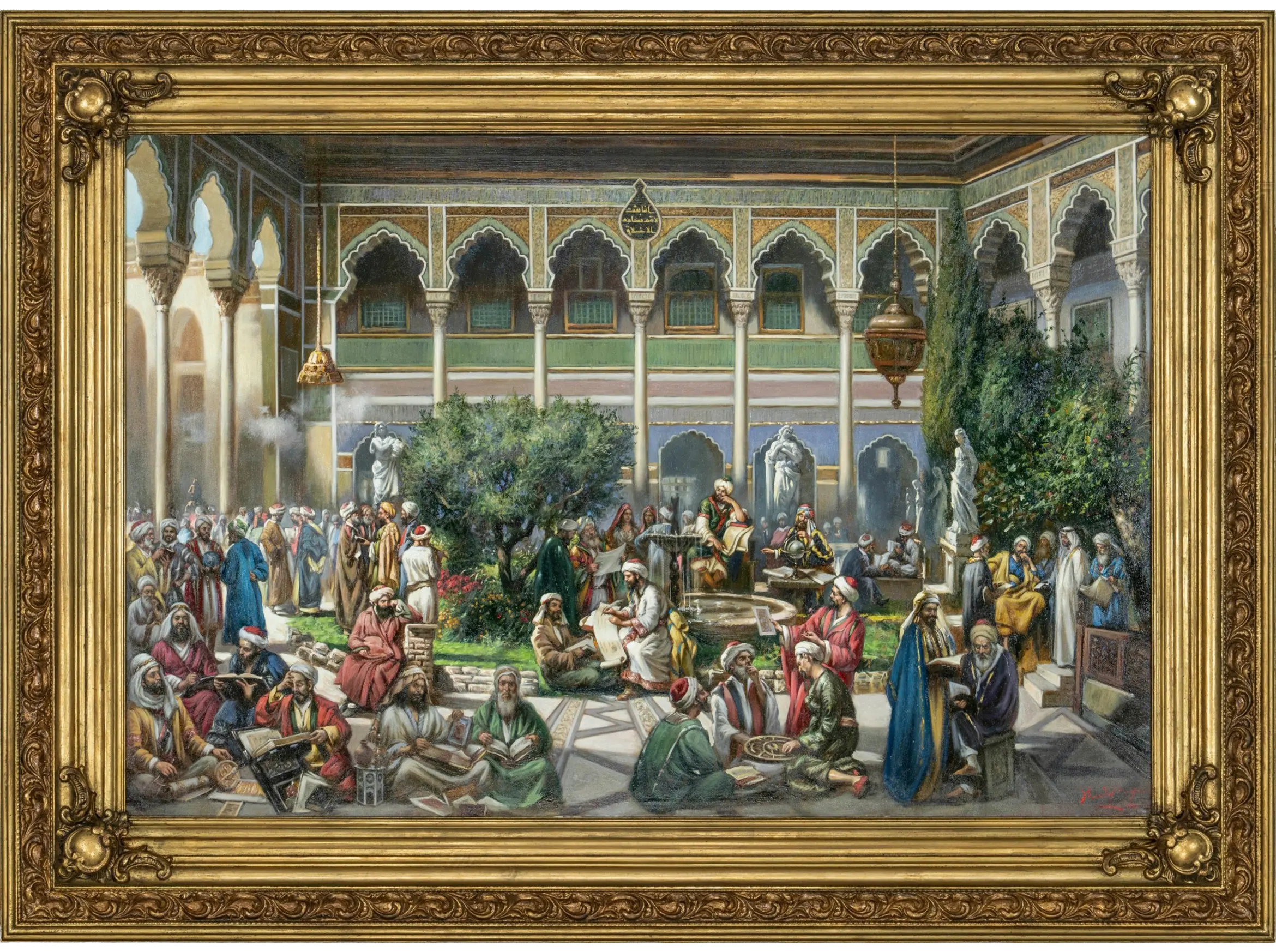
Abu Bakr al-Razi (864–925 CE)
A Persian physician, philosopher, and scientist from Rayy, Persia,
Abu Bakr al-Razi was one of the most influential figures of the Islamic Golden Age.
He is renowned for his emphasis on clinical observation and empirical medical practice.
Beyond medicine, he wrote on philosophy, logic, and other sciences,
leaving a lasting impact on scientific thought.
A Persian physician, philosopher, and scientist from Rayy, Persia,
Abu Bakr al-Razi was one of the most influential figures of the Islamic Golden Age.
He is renowned for his emphasis on clinical observation and empirical medical practice.
Beyond medicine, he wrote on philosophy, logic, and other sciences,
leaving a lasting impact on scientific thought.
Yahya ibn ʿAdi (893–974 CE)
A philosopher, logician, and translator born in Tikrit and active in Baghdad,
Yahya ibn ʿAdi was a leading figure of tenth-century Arabic philosophy. He played a key role in transmitting Greek philosophy into Arabic,
producing influential translations and works that shaped the study of logic.
A Christian thinker trained in Aristotelian philosophy, he applied rational methods to theological questions, exemplifying the intellectual pluralism of the Abbasid world.
A philosopher, logician, and translator born in Tikrit and active in Baghdad,
Yahya ibn ʿAdi was a leading figure of tenth-century Arabic philosophy. He played a key role in transmitting Greek philosophy into Arabic,
producing influential translations and works that shaped the study of logic.
A Christian thinker trained in Aristotelian philosophy, he applied rational methods to theological questions, exemplifying the intellectual pluralism of the Abbasid world.
Ibn al-Bayṭar (1197–1248 CE)
An Andalusian physician, botanist, and pharmacologist, Ibn al-Bayṭar was one of the leading authorities on medicinal substances in the medieval period. He is known for his systematic compilation of medical and botanical knowledge, documenting hundreds of therapeutic substances.
His Compendium on Simple Medicaments and Foods remains a landmark work in the history of pharmacology and botanical medicine.
An Andalusian physician, botanist, and pharmacologist, Ibn al-Bayṭar was one of the leading authorities on medicinal substances in the medieval period. He is known for his systematic compilation of medical and botanical knowledge, documenting hundreds of therapeutic substances.
His Compendium on Simple Medicaments and Foods remains a landmark work in the history of pharmacology and botanical medicine.
Al-Battani (858–929 CE)
An Arab astronomer and mathematician, Al-Battani was a major figure in medieval astronomy.
Working primarily in Raqqa, he refined astronomical measurements and corrected elements of Ptolemaic astronomy.
His Zij al-Ṣabiʾ became an important reference in the history of astronomy and influenced later scientific developments.
An Arab astronomer and mathematician, Al-Battani was a major figure in medieval astronomy.
Working primarily in Raqqa, he refined astronomical measurements and corrected elements of Ptolemaic astronomy.
His Zij al-Ṣabiʾ became an important reference in the history of astronomy and influenced later scientific developments.
Al-Farabi (872–951CE)
A major philosopher of the Abbasid period, Al-Farabi was known as “the Second Teacher” after Aristotle. He played a central role in developing and interpreting Greek philosophy, contributing to logic, metaphysics, and political philosophy.
In The Virtuous City, he articulated a philosophical vision of an ideal society founded on reason, ethics, and intellectual order.
A major philosopher of the Abbasid period, Al-Farabi was known as “the Second Teacher” after Aristotle. He played a central role in developing and interpreting Greek philosophy, contributing to logic, metaphysics, and political philosophy.
In The Virtuous City, he articulated a philosophical vision of an ideal society founded on reason, ethics, and intellectual order.
Abu Hamid Al-Ghazali (1058–1111 CE)
A Muslim scholar and thinker, born in Tus and active in Baghdad, Al-Ghazali is best known for his critique of Greek-influenced philosophy. In The Incoherence of the Philosophers, he challenged key metaphysical positions held by thinkers such as Ibn Sina and Al-Farabi, questioning the authority of philosophical reason in matters of divine truth.
His work sparked one of the most significant intellectual debates in Islamic philosophy concerning the limits of reason and its relationship to revelation.
A Muslim scholar and thinker, born in Tus and active in Baghdad, Al-Ghazali is best known for his critique of Greek-influenced philosophy. In The Incoherence of the Philosophers, he challenged key metaphysical positions held by thinkers such as Ibn Sina and Al-Farabi, questioning the authority of philosophical reason in matters of divine truth.
His work sparked one of the most significant intellectual debates in Islamic philosophy concerning the limits of reason and its relationship to revelation.
Ibn al-Haytham (965–1040 CE)
An Arab scientist in optics, mathematics, and astronomy, Ibn al-Haytham was a pioneering figure in the development of the experimental scientific method. He is best known for Kitab al-Manaẓir (The Book of Optics), in which he offered a systematic study of light and visual perception based on observation and experimentation.
His work laid foundational principles of optics and exerted a lasting influence on later scientific thought in Europe.
An Arab scientist in optics, mathematics, and astronomy, Ibn al-Haytham was a pioneering figure in the development of the experimental scientific method. He is best known for Kitab al-Manaẓir (The Book of Optics), in which he offered a systematic study of light and visual perception based on observation and experimentation.
His work laid foundational principles of optics and exerted a lasting influence on later scientific thought in Europe.
Al-Kindi (801–873 CE)
An Arab philosopher and polymath, Al-Kindi was among the earliest figures to introduce systematic philosophical thought into the Islamic world. Born in Kufa and educated in Baghdad, he was closely associated with the House of Wisdom and contributed to the translation of Greek scientific and philosophical works into Arabic.
Through his writings, he sought to harmonize reason and inherited knowledge, producing works across philosophy, mathematics, medicine, and music. He is widely regarded as a foundational figure of Arabic philosophy during the Abbasid period.
An Arab philosopher and polymath, Al-Kindi was among the earliest figures to introduce systematic philosophical thought into the Islamic world. Born in Kufa and educated in Baghdad, he was closely associated with the House of Wisdom and contributed to the translation of Greek scientific and philosophical works into Arabic.
Through his writings, he sought to harmonize reason and inherited knowledge, producing works across philosophy, mathematics, medicine, and music. He is widely regarded as a foundational figure of Arabic philosophy during the Abbasid period.
Al-Khansaʾ (575–646 CE)
An Arab poet and one of the most influential literary voices of the pre-Islamic and early Islamic periods. She is best known for her mastery of elegiac poetry, expressing loss and grief with remarkable emotional clarity and linguistic strength. Her poetry earned wide recognition in her lifetime and distinguished her among the leading poets of her era. Her verses were later preserved as exemplary models of early classical Arabic expressive clarity.
An Arab poet and one of the most influential literary voices of the pre-Islamic and early Islamic periods. She is best known for her mastery of elegiac poetry, expressing loss and grief with remarkable emotional clarity and linguistic strength. Her poetry earned wide recognition in her lifetime and distinguished her among the leading poets of her era. Her verses were later preserved as exemplary models of early classical Arabic expressive clarity.
Al-Khwarizmi (780–850 CE)
A mathematician, astronomer, and geographer from Khwarazm, Al-Khwarizmi was one of the most influential scientific figures of the Abbasid period. His work Al-Jabr wa al-Muqabala laid the foundations of algebra and played a key role in transmitting numerical and mathematical methods to Europe. His systematic approach to calculation left a lasting imprint on the history of mathematics.
A mathematician, astronomer, and geographer from Khwarazm, Al-Khwarizmi was one of the most influential scientific figures of the Abbasid period. His work Al-Jabr wa al-Muqabala laid the foundations of algebra and played a key role in transmitting numerical and mathematical methods to Europe. His systematic approach to calculation left a lasting imprint on the history of mathematics.
Wallada bint al-Mustakfi (1001–1091 CE)
An Andalusian poet and literary figure, Wallada bint al-Mustakfi was the daughter of the Umayyad caliph Muhammad III of Córdoba. Renowned for her intellect and poetic talent, she was a prominent voice in Andalusian literature. She hosted a celebrated literary salon that attracted leading poets and thinkers of her time, playing a key role in shaping the cultural life of al-Andalus and affirming women’s participation in intellectual life.
An Andalusian poet and literary figure, Wallada bint al-Mustakfi was the daughter of the Umayyad caliph Muhammad III of Córdoba. Renowned for her intellect and poetic talent, she was a prominent voice in Andalusian literature. She hosted a celebrated literary salon that attracted leading poets and thinkers of her time, playing a key role in shaping the cultural life of al-Andalus and affirming women’s participation in intellectual life.
Muhyiddin Ibn Arabi (1165–1240 CE)
A Sufi thinker and metaphysical philosopher born in al-Andalus, Ibn ʿArabi was one of the most influential figures in Islamic mystical thought. Rather than a rational philosopher, he articulated a philosophical vision grounded in spiritual experience and metaphysical reflection. His major works, including Fuṣuṣ al-Ḥikam and al-Futuḥat al-Makkiyya, are considered among the most profound texts of Islamic mysticism and metaphysics.
A Sufi thinker and metaphysical philosopher born in al-Andalus, Ibn ʿArabi was one of the most influential figures in Islamic mystical thought. Rather than a rational philosopher, he articulated a philosophical vision grounded in spiritual experience and metaphysical reflection. His major works, including Fuṣuṣ al-Ḥikam and al-Futuḥat al-Makkiyya, are considered among the most profound texts of Islamic mysticism and metaphysics.
Ibn Bajjah (Avempace) (c.1085–1138 CE)
An Andalusian philosopher, physician, and poet, born in Zaragoza and later active in the western Islamic world. He was among the earliest proponents of Aristotelian philosophy in al-Andalus and played a formative role in its development. His thought centered on the intellect and the soul, emphasizing rational understanding as the path to human perfection.
An Andalusian philosopher, physician, and poet, born in Zaragoza and later active in the western Islamic world. He was among the earliest proponents of Aristotelian philosophy in al-Andalus and played a formative role in its development. His thought centered on the intellect and the soul, emphasizing rational understanding as the path to human perfection.
Saadia Gaon (882–942 CE)
A Jewish rabbi, linguist, and rational thinker who lived during the Abbasid period, Saadia Gaon was an active figure in the intellectual centers of the Islamic Golden Age. He is known for his contributions to Hebrew linguistics, his translations of religious texts into Arabic, and his systematic articulation of Jewish law and belief. Through clear rational argument, he helped preserve the unity of Judaism, integrating Hebrew tradition with methods drawn from classical philosophical thought. His work reflects a rich moment of cross-cultural exchange within the Abbasid intellectual world.
A Jewish rabbi, linguist, and rational thinker who lived during the Abbasid period, Saadia Gaon was an active figure in the intellectual centers of the Islamic Golden Age. He is known for his contributions to Hebrew linguistics, his translations of religious texts into Arabic, and his systematic articulation of Jewish law and belief. Through clear rational argument, he helped preserve the unity of Judaism, integrating Hebrew tradition with methods drawn from classical philosophical thought. His work reflects a rich moment of cross-cultural exchange within the Abbasid intellectual world.
Jabir ibn Ḥayyan (721–815 CE)
A Muslim scholar associated with the early development of chemistry and experimental science. He is known for advancing systematic experimentation and the study of chemical substances, helping to shape chemistry as an empirical discipline. Works attributed to him exerted a lasting influence on the history of chemistry and pharmacology in both the Islamic world and medieval Europe.
A Muslim scholar associated with the early development of chemistry and experimental science. He is known for advancing systematic experimentation and the study of chemical substances, helping to shape chemistry as an empirical discipline. Works attributed to him exerted a lasting influence on the history of chemistry and pharmacology in both the Islamic world and medieval Europe.
Sheikh Mohammed bin Hamad Al Sharqi (b. 1986)
A cultural leader and patron of knowledge, Mohammed bin Hamad Al Sharqi serves as the Crown Prince of Fujairah. His presence in this work represents a contemporary continuation of Arabic philosophical tradition, grounded not in abstract theory but in institutional practice. Through the House of Philosophy in Fujairah and a range of scientific, literary, and cultural initiatives, he has contributed to restoring philosophy as a living public practice—one rooted in dialogue, critical inquiry, and intellectual engagement. In this context, his role reflects a modern articulation of philosophy as a social act, sustained through education, culture, and active stewardship.
A cultural leader and patron of knowledge, Mohammed bin Hamad Al Sharqi serves as the Crown Prince of Fujairah. His presence in this work represents a contemporary continuation of Arabic philosophical tradition, grounded not in abstract theory but in institutional practice. Through the House of Philosophy in Fujairah and a range of scientific, literary, and cultural initiatives, he has contributed to restoring philosophy as a living public practice—one rooted in dialogue, critical inquiry, and intellectual engagement. In this context, his role reflects a modern articulation of philosophy as a social act, sustained through education, culture, and active stewardship.
Ibn Khaldun (1332–1406 CE)
A historian and philosopher, Ibn Khaldun was a pioneer of social thought and one of the earliest thinkers to approach society and history through systematic observation. He emphasized empirical reality over abstract theory, seeking to understand the forces shaping the rise and decline of states and civilizations.
His analysis of (social cohesion) revealed how collective bonds drive power, change, and historical transformation. Through his work, society became a subject of inquiry rather than assumption.
A historian and philosopher, Ibn Khaldun was a pioneer of social thought and one of the earliest thinkers to approach society and history through systematic observation. He emphasized empirical reality over abstract theory, seeking to understand the forces shaping the rise and decline of states and civilizations.
His analysis of (social cohesion) revealed how collective bonds drive power, change, and historical transformation. Through his work, society became a subject of inquiry rather than assumption.
Ibn Baṭṭuṭa (1304–1369 CE)
A Moroccan Muslim traveler and scholar, Ibn Baṭṭuṭa is regarded as one of the greatest explorers of the pre-modern world. Over nearly thirty years, he journeyed across vast regions of the Islamic world and beyond. His experiences were recorded in The Rihla, a vivid account of the lands, peoples, and cultures he encountered throughout his travels.
A Moroccan Muslim traveler and scholar, Ibn Baṭṭuṭa is regarded as one of the greatest explorers of the pre-modern world. Over nearly thirty years, he journeyed across vast regions of the Islamic world and beyond. His experiences were recorded in The Rihla, a vivid account of the lands, peoples, and cultures he encountered throughout his travels.
Ibn al-Nafis (1213–1288 CE)
An Arab physician and scientist from Damascus, Ibn al-Nafis was one of the most important medical thinkers of the medieval period. He is best known for his accurate description of the pulmonary circulation of the blood, challenging long-held classical theories. His work advanced the study of anatomy and physiology and marked a significant step toward a scientific understanding of the human body.
An Arab physician and scientist from Damascus, Ibn al-Nafis was one of the most important medical thinkers of the medieval period. He is best known for his accurate description of the pulmonary circulation of the blood, challenging long-held classical theories. His work advanced the study of anatomy and physiology and marked a significant step toward a scientific understanding of the human body.
Ibn Rushd (Averroes) (1126–1198 CE)
An Andalusian philosopher, jurist, and physician, Ibn Rushd was a leading advocate of rational inquiry within the Islamic intellectual tradition. In his writings, he argued for the harmony between philosophy and religion, affirming the compatibility of reason and faith. Renowned for his extensive commentaries on Aristotle, his work profoundly influenced later philosophical thought in medieval Europe.
An Andalusian philosopher, jurist, and physician, Ibn Rushd was a leading advocate of rational inquiry within the Islamic intellectual tradition. In his writings, he argued for the harmony between philosophy and religion, affirming the compatibility of reason and faith. Renowned for his extensive commentaries on Aristotle, his work profoundly influenced later philosophical thought in medieval Europe.
Ibn Zuhr (Avenzoar) (1091–1161 CE)
An Andalusian physician and surgeon born in Seville, Ibn Zuhr was a leading medical figure of his time. He was known for his emphasis on clinical observation and practical medical practice, contributing significantly to medicine and surgery. A contemporary of Ibn Ṭufayl and Ibn Rushd, he represents a key chapter in the history of Andalusian medicine.
An Andalusian physician and surgeon born in Seville, Ibn Zuhr was a leading medical figure of his time. He was known for his emphasis on clinical observation and practical medical practice, contributing significantly to medicine and surgery. A contemporary of Ibn Ṭufayl and Ibn Rushd, he represents a key chapter in the history of Andalusian medicine.
Ibrahim al-Nazzam (775 - 845 CE)
A Muʿtazilite theologian and rational thinker from Basra, al-Naẓẓam was one of the most original intellectual figures of the Abbasid period. He was known for his critical approach to theological reasoning and his strong emphasis on rational analysis. Although most of his works are lost, his ideas left a lasting imprint on early Islamic intellectual history as a bold and unconventional voice.
A Muʿtazilite theologian and rational thinker from Basra, al-Naẓẓam was one of the most original intellectual figures of the Abbasid period. He was known for his critical approach to theological reasoning and his strong emphasis on rational analysis. Although most of his works are lost, his ideas left a lasting imprint on early Islamic intellectual history as a bold and unconventional voice.
Ibn Sina (Avicenna) (980–1037 CE)
A Persian polymath and one of the most influential thinkers of the Islamic Golden Age. He is best known for his works in medicine and philosophy, particularly The Canon of Medicine, which remained a standard medical reference for centuries. Through rigorous rational inquiry, his writings shaped scientific and philosophical thought and exerted a lasting influence on later intellectual traditions in Europe.
A Persian polymath and one of the most influential thinkers of the Islamic Golden Age. He is best known for his works in medicine and philosophy, particularly The Canon of Medicine, which remained a standard medical reference for centuries. Through rigorous rational inquiry, his writings shaped scientific and philosophical thought and exerted a lasting influence on later intellectual traditions in Europe.
Nasir al-Din al-Tusi (1201–1274 CE)
A Persian polymath and one of the leading scientific thinkers of the medieval Islamic world. He made major contributions to astronomy, developing refined planetary models and critically engaging with Ptolemaic astronomy. His work helped establish trigonometry as an independent mathematical discipline, alongside important contributions to logic and the natural sciences.
A Persian polymath and one of the leading scientific thinkers of the medieval Islamic world. He made major contributions to astronomy, developing refined planetary models and critically engaging with Ptolemaic astronomy. His work helped establish trigonometry as an independent mathematical discipline, alongside important contributions to logic and the natural sciences.
Jalal al-Din Rumi (1207–1273 CE)
A Sufi poet and spiritual thinker, born in Balkh and later settled in Konya under Seljuk rule. Rather than a rational philosopher in the classical sense, Rumi expressed profound philosophical ideas through mystical experience and poetry. In his work, the reed flute becomes a symbol of the human voice longing for its source, making music a path to reflection and insight. His writings explore existence, love, and inner transformation.
A Sufi poet and spiritual thinker, born in Balkh and later settled in Konya under Seljuk rule. Rather than a rational philosopher in the classical sense, Rumi expressed profound philosophical ideas through mystical experience and poetry. In his work, the reed flute becomes a symbol of the human voice longing for its source, making music a path to reflection and insight. His writings explore existence, love, and inner transformation.
Sohrevardi (1154–1191 CE)
A Persian philosopher and the founder of the Illuminationist school of Islamic philosophy. He developed a metaphysical system drawing on Platonic ideas and spiritual insight, presenting knowledge as illumination. His writings left a lasting impact on the relationship between philosophy and mysticism in Islamic thought.
A Persian philosopher and the founder of the Illuminationist school of Islamic philosophy. He developed a metaphysical system drawing on Platonic ideas and spiritual insight, presenting knowledge as illumination. His writings left a lasting impact on the relationship between philosophy and mysticism in Islamic thought.
Thabit ibn Qurra (826–901 CE)
A mathematician, astronomer, physician, and translator active in Abbasid Baghdad. He made important contributions to geometry and algebra and was among the early reformers of Ptolemaic astronomy. In mechanics, he played a foundational role in the development of statics, alongside writings in medicine and philosophy.
A mathematician, astronomer, physician, and translator active in Abbasid Baghdad. He made important contributions to geometry and algebra and was among the early reformers of Ptolemaic astronomy. In mechanics, he played a foundational role in the development of statics, alongside writings in medicine and philosophy.
Ibn Ṭufayl (1105–1185 CE)
An Andalusian philosopher and physician,
Ibn Ṭufayl was a leading figure of philosophical thought during the Almohad period.
He is best known for Ḥayy ibn Yaqẓan, a philosophical narrative
that explores the human intellect’s capacity to attain knowledge through reflection and experience,
independent of society and instruction.
In his work, reason and nature converge.
and philosophy becomes an inward journey
toward understanding and being.
An Andalusian philosopher and physician,
Ibn Ṭufayl was a leading figure of philosophical thought during the Almohad period.
He is best known for Ḥayy ibn Yaqẓan, a philosophical narrative
that explores the human intellect’s capacity to attain knowledge through reflection and experience,
independent of society and instruction.
In his work, reason and nature converge.
and philosophy becomes an inward journey
toward understanding and being.
Abu Bakr al-Razi (864–925 CE)
A Persian physician, philosopher, and scientist from Rayy, Persia,
Abu Bakr al-Razi was one of the most influential figures of the Islamic Golden Age.
He is renowned for his emphasis on clinical observation and empirical medical practice.
Beyond medicine, he wrote on philosophy, logic, and other sciences,
leaving a lasting impact on scientific thought.
A Persian physician, philosopher, and scientist from Rayy, Persia,
Abu Bakr al-Razi was one of the most influential figures of the Islamic Golden Age.
He is renowned for his emphasis on clinical observation and empirical medical practice.
Beyond medicine, he wrote on philosophy, logic, and other sciences,
leaving a lasting impact on scientific thought.
Yahya ibn ʿAdi (893–974 CE)
A philosopher, logician, and translator born in Tikrit and active in Baghdad,
Yahya ibn ʿAdi was a leading figure of tenth-century Arabic philosophy. He played a key role in transmitting Greek philosophy into Arabic,
producing influential translations and works that shaped the study of logic.
A Christian thinker trained in Aristotelian philosophy, he applied rational methods to theological questions, exemplifying the intellectual pluralism of the Abbasid world.
A philosopher, logician, and translator born in Tikrit and active in Baghdad,
Yahya ibn ʿAdi was a leading figure of tenth-century Arabic philosophy. He played a key role in transmitting Greek philosophy into Arabic,
producing influential translations and works that shaped the study of logic.
A Christian thinker trained in Aristotelian philosophy, he applied rational methods to theological questions, exemplifying the intellectual pluralism of the Abbasid world.
Ibn al-Bayṭar (1197–1248 CE)
An Andalusian physician, botanist, and pharmacologist, Ibn al-Bayṭar was one of the leading authorities on medicinal substances in the medieval period. He is known for his systematic compilation of medical and botanical knowledge, documenting hundreds of therapeutic substances.
His Compendium on Simple Medicaments and Foods remains a landmark work in the history of pharmacology and botanical medicine.
An Andalusian physician, botanist, and pharmacologist, Ibn al-Bayṭar was one of the leading authorities on medicinal substances in the medieval period. He is known for his systematic compilation of medical and botanical knowledge, documenting hundreds of therapeutic substances.
His Compendium on Simple Medicaments and Foods remains a landmark work in the history of pharmacology and botanical medicine.
Al-Battani (858–929 CE)
An Arab astronomer and mathematician, Al-Battani was a major figure in medieval astronomy.
Working primarily in Raqqa, he refined astronomical measurements and corrected elements of Ptolemaic astronomy.
His Zij al-Ṣabiʾ became an important reference in the history of astronomy and influenced later scientific developments.
An Arab astronomer and mathematician, Al-Battani was a major figure in medieval astronomy.
Working primarily in Raqqa, he refined astronomical measurements and corrected elements of Ptolemaic astronomy.
His Zij al-Ṣabiʾ became an important reference in the history of astronomy and influenced later scientific developments.
Al-Farabi (872–951CE)
A major philosopher of the Abbasid period, Al-Farabi was known as “the Second Teacher” after Aristotle. He played a central role in developing and interpreting Greek philosophy, contributing to logic, metaphysics, and political philosophy.
In The Virtuous City, he articulated a philosophical vision of an ideal society founded on reason, ethics, and intellectual order.
A major philosopher of the Abbasid period, Al-Farabi was known as “the Second Teacher” after Aristotle. He played a central role in developing and interpreting Greek philosophy, contributing to logic, metaphysics, and political philosophy.
In The Virtuous City, he articulated a philosophical vision of an ideal society founded on reason, ethics, and intellectual order.
Abu Hamid Al-Ghazali (1058–1111 CE)
A Muslim scholar and thinker, born in Tus and active in Baghdad, Al-Ghazali is best known for his critique of Greek-influenced philosophy. In The Incoherence of the Philosophers, he challenged key metaphysical positions held by thinkers such as Ibn Sina and Al-Farabi, questioning the authority of philosophical reason in matters of divine truth.
His work sparked one of the most significant intellectual debates in Islamic philosophy concerning the limits of reason and its relationship to revelation.
A Muslim scholar and thinker, born in Tus and active in Baghdad, Al-Ghazali is best known for his critique of Greek-influenced philosophy. In The Incoherence of the Philosophers, he challenged key metaphysical positions held by thinkers such as Ibn Sina and Al-Farabi, questioning the authority of philosophical reason in matters of divine truth.
His work sparked one of the most significant intellectual debates in Islamic philosophy concerning the limits of reason and its relationship to revelation.
Ibn al-Haytham (965–1040 CE)
An Arab scientist in optics, mathematics, and astronomy, Ibn al-Haytham was a pioneering figure in the development of the experimental scientific method. He is best known for Kitab al-Manaẓir (The Book of Optics), in which he offered a systematic study of light and visual perception based on observation and experimentation.
His work laid foundational principles of optics and exerted a lasting influence on later scientific thought in Europe.
An Arab scientist in optics, mathematics, and astronomy, Ibn al-Haytham was a pioneering figure in the development of the experimental scientific method. He is best known for Kitab al-Manaẓir (The Book of Optics), in which he offered a systematic study of light and visual perception based on observation and experimentation.
His work laid foundational principles of optics and exerted a lasting influence on later scientific thought in Europe.
Al-Kindi (801–873 CE)
An Arab philosopher and polymath, Al-Kindi was among the earliest figures to introduce systematic philosophical thought into the Islamic world. Born in Kufa and educated in Baghdad, he was closely associated with the House of Wisdom and contributed to the translation of Greek scientific and philosophical works into Arabic.
Through his writings, he sought to harmonize reason and inherited knowledge, producing works across philosophy, mathematics, medicine, and music. He is widely regarded as a foundational figure of Arabic philosophy during the Abbasid period.
An Arab philosopher and polymath, Al-Kindi was among the earliest figures to introduce systematic philosophical thought into the Islamic world. Born in Kufa and educated in Baghdad, he was closely associated with the House of Wisdom and contributed to the translation of Greek scientific and philosophical works into Arabic.
Through his writings, he sought to harmonize reason and inherited knowledge, producing works across philosophy, mathematics, medicine, and music. He is widely regarded as a foundational figure of Arabic philosophy during the Abbasid period.
Al-Khansaʾ (575–646 CE)
An Arab poet and one of the most influential literary voices of the pre-Islamic and early Islamic periods. She is best known for her mastery of elegiac poetry, expressing loss and grief with remarkable emotional clarity and linguistic strength. Her poetry earned wide recognition in her lifetime and distinguished her among the leading poets of her era. Her verses were later preserved as exemplary models of early classical Arabic expressive clarity.
An Arab poet and one of the most influential literary voices of the pre-Islamic and early Islamic periods. She is best known for her mastery of elegiac poetry, expressing loss and grief with remarkable emotional clarity and linguistic strength. Her poetry earned wide recognition in her lifetime and distinguished her among the leading poets of her era. Her verses were later preserved as exemplary models of early classical Arabic expressive clarity.
Al-Khwarizmi (780–850 CE)
A mathematician, astronomer, and geographer from Khwarazm, Al-Khwarizmi was one of the most influential scientific figures of the Abbasid period. His work Al-Jabr wa al-Muqabala laid the foundations of algebra and played a key role in transmitting numerical and mathematical methods to Europe. His systematic approach to calculation left a lasting imprint on the history of mathematics.
A mathematician, astronomer, and geographer from Khwarazm, Al-Khwarizmi was one of the most influential scientific figures of the Abbasid period. His work Al-Jabr wa al-Muqabala laid the foundations of algebra and played a key role in transmitting numerical and mathematical methods to Europe. His systematic approach to calculation left a lasting imprint on the history of mathematics.
Wallada bint al-Mustakfi (1001–1091 CE)
An Andalusian poet and literary figure, Wallada bint al-Mustakfi was the daughter of the Umayyad caliph Muhammad III of Córdoba. Renowned for her intellect and poetic talent, she was a prominent voice in Andalusian literature. She hosted a celebrated literary salon that attracted leading poets and thinkers of her time, playing a key role in shaping the cultural life of al-Andalus and affirming women’s participation in intellectual life.
An Andalusian poet and literary figure, Wallada bint al-Mustakfi was the daughter of the Umayyad caliph Muhammad III of Córdoba. Renowned for her intellect and poetic talent, she was a prominent voice in Andalusian literature. She hosted a celebrated literary salon that attracted leading poets and thinkers of her time, playing a key role in shaping the cultural life of al-Andalus and affirming women’s participation in intellectual life.
Muhyiddin Ibn Arabi (1165–1240 CE)
A Sufi thinker and metaphysical philosopher born in al-Andalus, Ibn ʿArabi was one of the most influential figures in Islamic mystical thought. Rather than a rational philosopher, he articulated a philosophical vision grounded in spiritual experience and metaphysical reflection. His major works, including Fuṣuṣ al-Ḥikam and al-Futuḥat al-Makkiyya, are considered among the most profound texts of Islamic mysticism and metaphysics.
A Sufi thinker and metaphysical philosopher born in al-Andalus, Ibn ʿArabi was one of the most influential figures in Islamic mystical thought. Rather than a rational philosopher, he articulated a philosophical vision grounded in spiritual experience and metaphysical reflection. His major works, including Fuṣuṣ al-Ḥikam and al-Futuḥat al-Makkiyya, are considered among the most profound texts of Islamic mysticism and metaphysics.
Ibn Bajjah (Avempace) (c.1085–1138 CE)
An Andalusian philosopher, physician, and poet, born in Zaragoza and later active in the western Islamic world. He was among the earliest proponents of Aristotelian philosophy in al-Andalus and played a formative role in its development. His thought centered on the intellect and the soul, emphasizing rational understanding as the path to human perfection.
An Andalusian philosopher, physician, and poet, born in Zaragoza and later active in the western Islamic world. He was among the earliest proponents of Aristotelian philosophy in al-Andalus and played a formative role in its development. His thought centered on the intellect and the soul, emphasizing rational understanding as the path to human perfection.
Saadia Gaon (882–942 CE)
A Jewish rabbi, linguist, and rational thinker who lived during the Abbasid period, Saadia Gaon was an active figure in the intellectual centers of the Islamic Golden Age. He is known for his contributions to Hebrew linguistics, his translations of religious texts into Arabic, and his systematic articulation of Jewish law and belief. Through clear rational argument, he helped preserve the unity of Judaism, integrating Hebrew tradition with methods drawn from classical philosophical thought. His work reflects a rich moment of cross-cultural exchange within the Abbasid intellectual world.
A Jewish rabbi, linguist, and rational thinker who lived during the Abbasid period, Saadia Gaon was an active figure in the intellectual centers of the Islamic Golden Age. He is known for his contributions to Hebrew linguistics, his translations of religious texts into Arabic, and his systematic articulation of Jewish law and belief. Through clear rational argument, he helped preserve the unity of Judaism, integrating Hebrew tradition with methods drawn from classical philosophical thought. His work reflects a rich moment of cross-cultural exchange within the Abbasid intellectual world.
Jabir ibn Ḥayyan (721–815 CE)
A Muslim scholar associated with the early development of chemistry and experimental science. He is known for advancing systematic experimentation and the study of chemical substances, helping to shape chemistry as an empirical discipline. Works attributed to him exerted a lasting influence on the history of chemistry and pharmacology in both the Islamic world and medieval Europe.
A Muslim scholar associated with the early development of chemistry and experimental science. He is known for advancing systematic experimentation and the study of chemical substances, helping to shape chemistry as an empirical discipline. Works attributed to him exerted a lasting influence on the history of chemistry and pharmacology in both the Islamic world and medieval Europe.
Sheikh Mohammed bin Hamad Al Sharqi (b. 1986)
A cultural leader and patron of knowledge, Mohammed bin Hamad Al Sharqi serves as the Crown Prince of Fujairah. His presence in this work represents a contemporary continuation of Arabic philosophical tradition, grounded not in abstract theory but in institutional practice. Through the House of Philosophy in Fujairah and a range of scientific, literary, and cultural initiatives, he has contributed to restoring philosophy as a living public practice—one rooted in dialogue, critical inquiry, and intellectual engagement. In this context, his role reflects a modern articulation of philosophy as a social act, sustained through education, culture, and active stewardship.
A cultural leader and patron of knowledge, Mohammed bin Hamad Al Sharqi serves as the Crown Prince of Fujairah. His presence in this work represents a contemporary continuation of Arabic philosophical tradition, grounded not in abstract theory but in institutional practice. Through the House of Philosophy in Fujairah and a range of scientific, literary, and cultural initiatives, he has contributed to restoring philosophy as a living public practice—one rooted in dialogue, critical inquiry, and intellectual engagement. In this context, his role reflects a modern articulation of philosophy as a social act, sustained through education, culture, and active stewardship.
Ibn Khaldun (1332–1406 CE)
A historian and philosopher, Ibn Khaldun was a pioneer of social thought and one of the earliest thinkers to approach society and history through systematic observation. He emphasized empirical reality over abstract theory, seeking to understand the forces shaping the rise and decline of states and civilizations.
His analysis of (social cohesion) revealed how collective bonds drive power, change, and historical transformation. Through his work, society became a subject of inquiry rather than assumption.
A historian and philosopher, Ibn Khaldun was a pioneer of social thought and one of the earliest thinkers to approach society and history through systematic observation. He emphasized empirical reality over abstract theory, seeking to understand the forces shaping the rise and decline of states and civilizations.
His analysis of (social cohesion) revealed how collective bonds drive power, change, and historical transformation. Through his work, society became a subject of inquiry rather than assumption.
Ibn Baṭṭuṭa (1304–1369 CE)
A Moroccan Muslim traveler and scholar, Ibn Baṭṭuṭa is regarded as one of the greatest explorers of the pre-modern world. Over nearly thirty years, he journeyed across vast regions of the Islamic world and beyond. His experiences were recorded in The Rihla, a vivid account of the lands, peoples, and cultures he encountered throughout his travels.
A Moroccan Muslim traveler and scholar, Ibn Baṭṭuṭa is regarded as one of the greatest explorers of the pre-modern world. Over nearly thirty years, he journeyed across vast regions of the Islamic world and beyond. His experiences were recorded in The Rihla, a vivid account of the lands, peoples, and cultures he encountered throughout his travels.
Ibn al-Nafis (1213–1288 CE)
An Arab physician and scientist from Damascus, Ibn al-Nafis was one of the most important medical thinkers of the medieval period. He is best known for his accurate description of the pulmonary circulation of the blood, challenging long-held classical theories. His work advanced the study of anatomy and physiology and marked a significant step toward a scientific understanding of the human body.
An Arab physician and scientist from Damascus, Ibn al-Nafis was one of the most important medical thinkers of the medieval period. He is best known for his accurate description of the pulmonary circulation of the blood, challenging long-held classical theories. His work advanced the study of anatomy and physiology and marked a significant step toward a scientific understanding of the human body.
Ibn Rushd (Averroes) (1126–1198 CE)
An Andalusian philosopher, jurist, and physician, Ibn Rushd was a leading advocate of rational inquiry within the Islamic intellectual tradition. In his writings, he argued for the harmony between philosophy and religion, affirming the compatibility of reason and faith. Renowned for his extensive commentaries on Aristotle, his work profoundly influenced later philosophical thought in medieval Europe.
An Andalusian philosopher, jurist, and physician, Ibn Rushd was a leading advocate of rational inquiry within the Islamic intellectual tradition. In his writings, he argued for the harmony between philosophy and religion, affirming the compatibility of reason and faith. Renowned for his extensive commentaries on Aristotle, his work profoundly influenced later philosophical thought in medieval Europe.
Ibn Zuhr (Avenzoar) (1091–1161 CE)
An Andalusian physician and surgeon born in Seville, Ibn Zuhr was a leading medical figure of his time. He was known for his emphasis on clinical observation and practical medical practice, contributing significantly to medicine and surgery. A contemporary of Ibn Ṭufayl and Ibn Rushd, he represents a key chapter in the history of Andalusian medicine.
An Andalusian physician and surgeon born in Seville, Ibn Zuhr was a leading medical figure of his time. He was known for his emphasis on clinical observation and practical medical practice, contributing significantly to medicine and surgery. A contemporary of Ibn Ṭufayl and Ibn Rushd, he represents a key chapter in the history of Andalusian medicine.
Ibrahim al-Nazzam (775 - 845 CE)
A Muʿtazilite theologian and rational thinker from Basra, al-Naẓẓam was one of the most original intellectual figures of the Abbasid period. He was known for his critical approach to theological reasoning and his strong emphasis on rational analysis. Although most of his works are lost, his ideas left a lasting imprint on early Islamic intellectual history as a bold and unconventional voice.
A Muʿtazilite theologian and rational thinker from Basra, al-Naẓẓam was one of the most original intellectual figures of the Abbasid period. He was known for his critical approach to theological reasoning and his strong emphasis on rational analysis. Although most of his works are lost, his ideas left a lasting imprint on early Islamic intellectual history as a bold and unconventional voice.
Ibn Sina (Avicenna) (980–1037 CE)
A Persian polymath and one of the most influential thinkers of the Islamic Golden Age. He is best known for his works in medicine and philosophy, particularly The Canon of Medicine, which remained a standard medical reference for centuries. Through rigorous rational inquiry, his writings shaped scientific and philosophical thought and exerted a lasting influence on later intellectual traditions in Europe.
A Persian polymath and one of the most influential thinkers of the Islamic Golden Age. He is best known for his works in medicine and philosophy, particularly The Canon of Medicine, which remained a standard medical reference for centuries. Through rigorous rational inquiry, his writings shaped scientific and philosophical thought and exerted a lasting influence on later intellectual traditions in Europe.
Nasir al-Din al-Tusi (1201–1274 CE)
A Persian polymath and one of the leading scientific thinkers of the medieval Islamic world. He made major contributions to astronomy, developing refined planetary models and critically engaging with Ptolemaic astronomy. His work helped establish trigonometry as an independent mathematical discipline, alongside important contributions to logic and the natural sciences.
A Persian polymath and one of the leading scientific thinkers of the medieval Islamic world. He made major contributions to astronomy, developing refined planetary models and critically engaging with Ptolemaic astronomy. His work helped establish trigonometry as an independent mathematical discipline, alongside important contributions to logic and the natural sciences.
Jalal al-Din Rumi (1207–1273 CE)
A Sufi poet and spiritual thinker, born in Balkh and later settled in Konya under Seljuk rule. Rather than a rational philosopher in the classical sense, Rumi expressed profound philosophical ideas through mystical experience and poetry. In his work, the reed flute becomes a symbol of the human voice longing for its source, making music a path to reflection and insight. His writings explore existence, love, and inner transformation.
A Sufi poet and spiritual thinker, born in Balkh and later settled in Konya under Seljuk rule. Rather than a rational philosopher in the classical sense, Rumi expressed profound philosophical ideas through mystical experience and poetry. In his work, the reed flute becomes a symbol of the human voice longing for its source, making music a path to reflection and insight. His writings explore existence, love, and inner transformation.
Sohrevardi (1154–1191 CE)
A Persian philosopher and the founder of the Illuminationist school of Islamic philosophy. He developed a metaphysical system drawing on Platonic ideas and spiritual insight, presenting knowledge as illumination. His writings left a lasting impact on the relationship between philosophy and mysticism in Islamic thought.
A Persian philosopher and the founder of the Illuminationist school of Islamic philosophy. He developed a metaphysical system drawing on Platonic ideas and spiritual insight, presenting knowledge as illumination. His writings left a lasting impact on the relationship between philosophy and mysticism in Islamic thought.
Thabit ibn Qurra (826–901 CE)
A mathematician, astronomer, physician, and translator active in Abbasid Baghdad. He made important contributions to geometry and algebra and was among the early reformers of Ptolemaic astronomy. In mechanics, he played a foundational role in the development of statics, alongside writings in medicine and philosophy.
A mathematician, astronomer, physician, and translator active in Abbasid Baghdad. He made important contributions to geometry and algebra and was among the early reformers of Ptolemaic astronomy. In mechanics, he played a foundational role in the development of statics, alongside writings in medicine and philosophy.
Ibn Ṭufayl (1105–1185 CE)
An Andalusian philosopher and physician,
Ibn Ṭufayl was a leading figure of philosophical thought during the Almohad period.
He is best known for Ḥayy ibn Yaqẓan, a philosophical narrative
that explores the human intellect’s capacity to attain knowledge through reflection and experience,
independent of society and instruction.
In his work, reason and nature converge.
and philosophy becomes an inward journey
toward understanding and being.
An Andalusian philosopher and physician,
Ibn Ṭufayl was a leading figure of philosophical thought during the Almohad period.
He is best known for Ḥayy ibn Yaqẓan, a philosophical narrative
that explores the human intellect’s capacity to attain knowledge through reflection and experience,
independent of society and instruction.
In his work, reason and nature converge.
and philosophy becomes an inward journey
toward understanding and being.
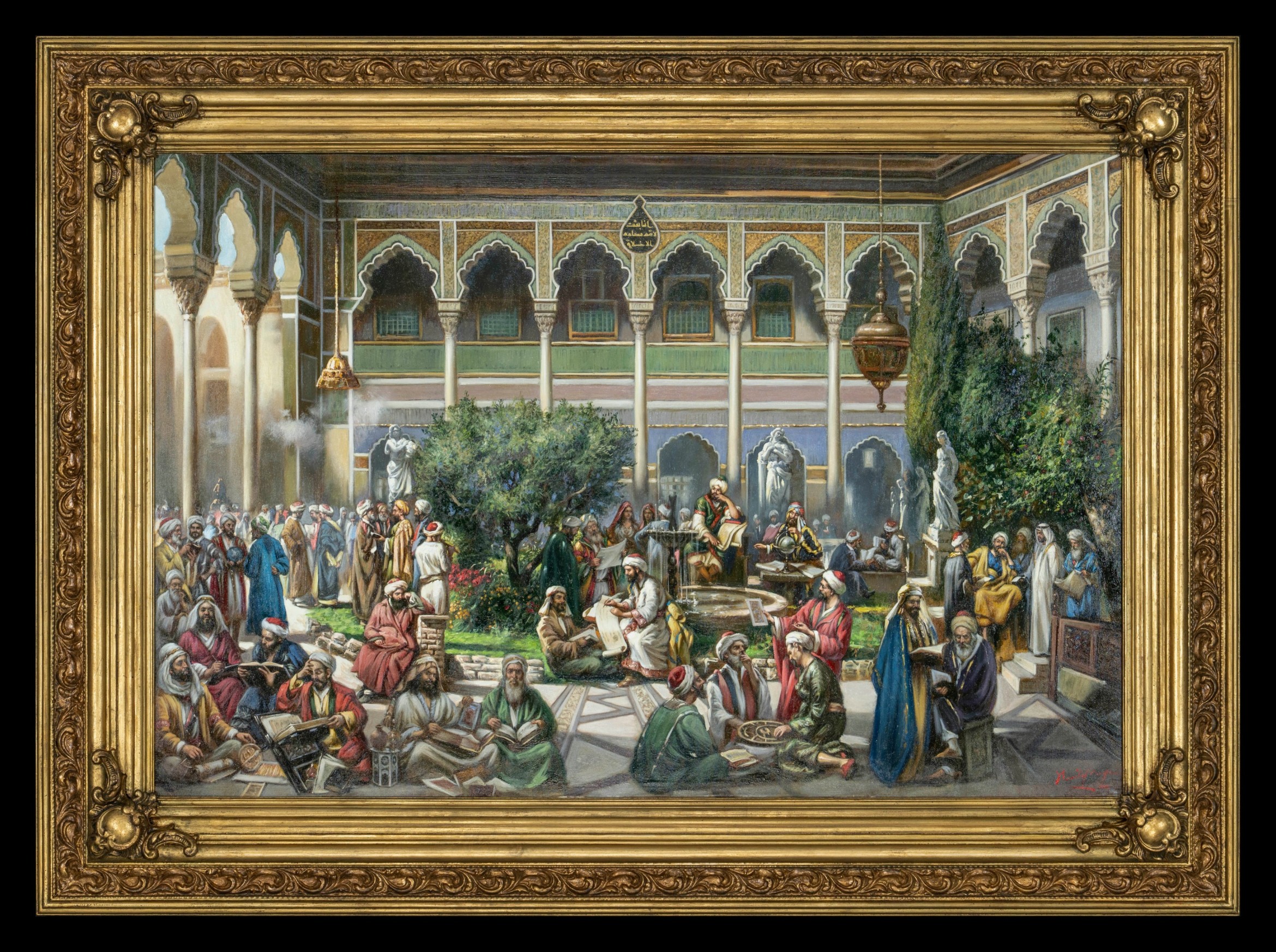
Abu Bakr al-Razi (864–925 CE)
Abu Bakr al-Razi (864–925 CE)
A Persian physician, philosopher, and scientist from Rayy, Persia,
Abu Bakr al-Razi was one of the most influential figures of the Islamic Golden Age.
He is renowned for his emphasis on clinical observation and empirical medical practice.
Beyond medicine, he wrote on philosophy, logic, and other sciences,
leaving a lasting impact on scientific thought.
A Persian physician, philosopher,
And scientist from Rayy,
Persia, Abu Bakr al-Razi
Was one of the most
Influential Figures of the Islamic
Golden Age. He is restored
for his compassion on clinical
Conservation and Empirical Medical Practice.
Beyond medicine, he wrote on
philosophy, logic, and other sciences,
Leaving a Lasting Impact on Scientific Thought.
Abu Bakr al-Razi (864–925 CE)
A Persian physician, philosopher, and scientist from Rayy, Persia,
Abu Bakr al-Razi was one of the most influential figures of the Islamic Golden Age.
He is renowned for his emphasis on clinical observation and empirical medical practice.
Beyond medicine, he wrote on philosophy, logic, and other sciences,
leaving a lasting impact on scientific thought.
A Persian physician, philosopher,
And scientist from Rayy,
Persia, Abu Bakr al-Razi
Was one of the most
Influential Figures of the Islamic
Golden Age. He is restored
for his compassion on clinical
Conservation and Empirical Medical Practice.
Beyond medicine, he wrote on
philosophy, logic, and other sciences,
Leaving a Lasting Impact on Scientific Thought.
Yahya ibn ʿAdi (893–974 CE)
Yahya ibn ʿAdi (893–974 CE)
A philosopher, logician, and translator born in Tikrit and active in Baghdad,
Yahya ibn ʿAdi was a leading figure of tenth-century Arabic philosophy. He played a key role in transmitting Greek philosophy into Arabic,
producing influential translations and works that shaped the study of logic.
A Christian thinker trained in Aristotelian philosophy, he applied rational methods to theological questions, exemplifying the intellectual pluralism of the Abbasid world.
A philosopher, logician, and translator
Born in Tikrit and Active
In Baghdad, Yahya ibn AAdi
Was a leading figure of tenth-century
English philosophy. He played a key role
In translating Greek philosophy into Arabic,
producing influent translations and works
That's the lesson of logic.
A Christian thinker trained in Ari Home Home otelian philosophy,
He applied rational m Ethods to the Technical questions,
Explore the intel Physical Pluralism of the Abbasid World.
Yahya ibn ʿAdi (893–974 CE)
A philosopher, logician, and translator born in Tikrit and active in Baghdad,
Yahya ibn ʿAdi was a leading figure of tenth-century Arabic philosophy. He played a key role in transmitting Greek philosophy into Arabic,
producing influential translations and works that shaped the study of logic.
A Christian thinker trained in Aristotelian philosophy, he applied rational methods to theological questions, exemplifying the intellectual pluralism of the Abbasid world.
A philosopher, logician, and translator
Born in Tikrit and Active
In Baghdad, Yahya ibn AAdi
Was a leading figure of tenth-century
English philosophy. He played a key role
In translating Greek philosophy into Arabic,
producing influent translations and works
That's the lesson of logic.
A Christian thinker trained in Ari Home Home otelian philosophy,
He applied rational m Ethods to the Technical questions,
Explore the intel Physical Pluralism of the Abbasid World.
Ibn al-Bayṭar (1197–1248 CE)
Ibn al-Bayarar (1197121248 CE)
An Andalusian physician, botanist, and pharmacologist, Ibn al-Bayṭar was one of the leading authorities on medicinal substances in the medieval period. He is known for his systematic compilation of medical and botanical knowledge, documenting hundreds of therapeutic substances.
His Compendium on Simple Medicaments and Foods remains a landmark work in the history of pharmacology and botanical medicine.
An Andalusian Physicist, Botanist,
and Pharma c sync, corrected by elderman B
One of the leading authorities on medical conditions
In the middle period. He is known
For his systematic synthesis of medical and botanical knowledge,
Documenting Hundreds of Therapeutic Substance.
His Compendium on Simple Medicine Agents and Foods Remains
A Landmark Work in the History of Pharma Science and Botanical Medicine.
Ibn al-Bayarar (1197121248 CE)
An Andalusian physician, botanist, and pharmacologist, Ibn al-Bayṭar was one of the leading authorities on medicinal substances in the medieval period. He is known for his systematic compilation of medical and botanical knowledge, documenting hundreds of therapeutic substances.
His Compendium on Simple Medicaments and Foods remains a landmark work in the history of pharmacology and botanical medicine.
An Andalusian Physicist, Botanist,
and Pharma c sync, corrected by elderman B
One of the leading authorities on medical conditions
In the middle period. He is known
For his systematic synthesis of medical and botanical knowledge,
Documenting Hundreds of Therapeutic Substance.
His Compendium on Simple Medicine Agents and Foods Remains
A Landmark Work in the History of Pharma Science and Botanical Medicine.
Al-Battani (858–929 CE)
Al-Battani (858B929 CE)
An Arab astronomer and mathematician, Al-Battani was a major figure in medieval astronomy.
Working primarily in Raqqa, he refined astronomical measurements and corrected elements of Ptolemaic astronomy.
His Zij al-Ṣabiʾ became an important reference in the history of astronomy and influenced later scientific developments.
An Arab Stronomer and Mathematician,
Al-Battani was a major figure
in mediaval a Stronomy.Working Primarily in Raqqa,
He finished a stronnomical measurement ents and corre Cted Elem Home
the Ptolemaic Stronomy. His zij al-Ṣabime became
An important reference in the history of a Stronomy
and influenced later scientific developments.
Al-Battani (858B929 CE)
An Arab astronomer and mathematician, Al-Battani was a major figure in medieval astronomy.
Working primarily in Raqqa, he refined astronomical measurements and corrected elements of Ptolemaic astronomy.
His Zij al-Ṣabiʾ became an important reference in the history of astronomy and influenced later scientific developments.
An Arab Stronomer and Mathematician,
Al-Battani was a major figure
in mediaval a Stronomy.Working Primarily in Raqqa,
He finished a stronnomical measurement ents and corre Cted Elem Home
the Ptolemaic Stronomy. His zij al-Ṣabime became
An important reference in the history of a Stronomy
and influenced later scientific developments.
Al-Farabi (872–951CE)
Al-Farabi (87295951 CE)
A major philosopher of the Abbasid period, Al-Farabi was known as “the Second Teacher” after Aristotle. He played a central role in developing and interpreting Greek philosophy, contributing to logic, metaphysics, and political philosophy.
In The Virtuous City, he articulated a philosophical vision of an ideal society founded on reason, ethics, and intellectual order.
A major philo Sopher of the Abbasid period,
Al-Farabi was known as "The Second Teacher"
After Aristotle. He played a central role
In developing and interpreting Greek philosophy,
"Contribution to Logic, Metaphysics, and Political Philosophy".
In the Virtuous City, he articulated a philosophical vision
of an ideal society founded on reason, ethics, and intellect actual order.
Al-Farabi (87295951 CE)
A major philosopher of the Abbasid period, Al-Farabi was known as “the Second Teacher” after Aristotle. He played a central role in developing and interpreting Greek philosophy, contributing to logic, metaphysics, and political philosophy.
In The Virtuous City, he articulated a philosophical vision of an ideal society founded on reason, ethics, and intellectual order.
A major philo Sopher of the Abbasid period,
Al-Farabi was known as "The Second Teacher"
After Aristotle. He played a central role
In developing and interpreting Greek philosophy,
"Contribution to Logic, Metaphysics, and Political Philosophy".
In the Virtuous City, he articulated a philosophical vision
of an ideal society founded on reason, ethics, and intellect actual order.
Abu Hamid Al-Ghazali (1058–1111 CE)
Al-Ghazali (1058 (101111 CE)
A Muslim scholar and thinker, born in Tus and active in Baghdad, Al-Ghazali is best known for his critique of Greek-influenced philosophy. In The Incoherence of the Philosophers, he challenged key metaphysical positions held by thinkers such as Ibn Sina and Al-Farabi, questioning the authority of philosophical reason in matters of divine truth.
His work sparked one of the most significant intellectual debates in Islamic philosophy concerning the limits of reason and its relationship to revelation.
A Muslim scholar and thinker,
Born in Tus and active in Baghdad,
Al-Ghazali is the best known for his Greek-influenced philosophy.
In the Coh Ave Prince of the Philo Sophers,
He Challenged Key Metaphysical Positions Held by Thinkers Such as Ibn Sina and Al-Farabi,
Questioning the authority of philosophical reason in matters of Divine Truth.
His work sparked one of the most significant intelle Actual Debates in Islamic Philosophy
Concerning the limits of reason and its relationship to development.
Al-Ghazali (1058 (101111 CE)
A Muslim scholar and thinker, born in Tus and active in Baghdad, Al-Ghazali is best known for his critique of Greek-influenced philosophy. In The Incoherence of the Philosophers, he challenged key metaphysical positions held by thinkers such as Ibn Sina and Al-Farabi, questioning the authority of philosophical reason in matters of divine truth.
His work sparked one of the most significant intellectual debates in Islamic philosophy concerning the limits of reason and its relationship to revelation.
A Muslim scholar and thinker,
Born in Tus and active in Baghdad,
Al-Ghazali is the best known for his Greek-influenced philosophy.
In the Coh Ave Prince of the Philo Sophers,
He Challenged Key Metaphysical Positions Held by Thinkers Such as Ibn Sina and Al-Farabi,
Questioning the authority of philosophical reason in matters of Divine Truth.
His work sparked one of the most significant intelle Actual Debates in Islamic Philosophy
Concerning the limits of reason and its relationship to development.
Ibn al-Haytham (965–1040 CE)
Ibn al-Haytham (9651040)
An Arab scientist in optics, mathematics, and astronomy, Ibn al-Haytham was a pioneering figure in the development of the experimental scientific method. He is best known for Kitab al-Manaẓir (The Book of Optics), in which he offered a systematic study of light and visual perception based on observation and experimentation.
His work laid foundational principles of optics and exerted a lasting influence on later scientific thought in Europe.
An Arab Scientist in Optics,
Mathematics, and a Stronomy, Ibn al-Haytham was a Pioneering Figure
In the development of the experience Ental Scientific Method.
He is best known for Kitab al-Manairir (The Book of Optics).
In which he offered a systematic study of light and visual perception
Based on Observation and Experimentation.
His work Laid Foundation Principles of Optics and Exercise A Lasting Influence
On later scientific thought in Europe.
Ibn al-Haytham (9651040)
An Arab scientist in optics, mathematics, and astronomy, Ibn al-Haytham was a pioneering figure in the development of the experimental scientific method. He is best known for Kitab al-Manaẓir (The Book of Optics), in which he offered a systematic study of light and visual perception based on observation and experimentation.
His work laid foundational principles of optics and exerted a lasting influence on later scientific thought in Europe.
An Arab Scientist in Optics,
Mathematics, and a Stronomy, Ibn al-Haytham was a Pioneering Figure
In the development of the experience Ental Scientific Method.
He is best known for Kitab al-Manairir (The Book of Optics).
In which he offered a systematic study of light and visual perception
Based on Observation and Experimentation.
His work Laid Foundation Principles of Optics and Exercise A Lasting Influence
On later scientific thought in Europe.
Al-Kindi (801–873 CE)
Al-Kindi (801 CE873 CE)
An Arab philosopher and polymath, Al-Kindi was among the earliest figures to introduce systematic philosophical thought into the Islamic world. Born in Kufa and educated in Baghdad, he was closely associated with the House of Wisdom and contributed to the translation of Greek scientific and philosophical works into Arabic.
Through his writings, he sought to harmonize reason and inherited knowledge, producing works across philosophy, mathematics, medicine, and music. He is widely regarded as a foundational figure of Arabic philosophy during the Abbasid period.
An Arab philosopher and polymath,
Al-Kindi was among the earliest figures to introduce a systematic philo Sophical Thought
into the Islamic world. Born in Kufa and educated in Baghdad,
He Was Closely A Associated with the House of Wisdom
and contributed to the translation of Greek scientific and philo Sophical works into Arabic.
Through His Writings, He Thought to Harmonize Reason and Inherited Knowledge,
Producing works a Cross philosophy, mathematics, medicine, and music.
He is widely regarded as a foundational figure of Arabic philosophy during the Abbasid period.
Al-Kindi (801 CE873 CE)
An Arab philosopher and polymath, Al-Kindi was among the earliest figures to introduce systematic philosophical thought into the Islamic world. Born in Kufa and educated in Baghdad, he was closely associated with the House of Wisdom and contributed to the translation of Greek scientific and philosophical works into Arabic.
Through his writings, he sought to harmonize reason and inherited knowledge, producing works across philosophy, mathematics, medicine, and music. He is widely regarded as a foundational figure of Arabic philosophy during the Abbasid period.
An Arab philosopher and polymath,
Al-Kindi was among the earliest figures to introduce a systematic philo Sophical Thought
into the Islamic world. Born in Kufa and educated in Baghdad,
He Was Closely A Associated with the House of Wisdom
and contributed to the translation of Greek scientific and philo Sophical works into Arabic.
Through His Writings, He Thought to Harmonize Reason and Inherited Knowledge,
Producing works a Cross philosophy, mathematics, medicine, and music.
He is widely regarded as a foundational figure of Arabic philosophy during the Abbasid period.
Al-Khansaʾ (575–646 CE)
Al-Khansaʾ (575 CE46 CE)
An Arab poet and one of the most influential literary voices of the pre-Islamic and early Islamic periods. She is best known for her mastery of elegiac poetry, expressing loss and grief with remarkable emotional clarity and linguistic strength. Her poetry earned wide recognition in her lifetime and distinguished her among the leading poets of her era. Her verses were later preserved as exemplary models of early classical Arabic expressive clarity.
An Arab poet and one of the most influent literary voices
The Pre-Islamic and Early Islamic Periods.
She is best known for her stery of elegiac Poetry,
Expressing Loss and Grief with Markable Em "Oternal Clarity and Linguistic Strength".
Her Poetry Earned Wide Recognition in Her Lifetime
and distinguished her among the leading pots of her Era.
Her Verses Were Later Preserved as Exemplar Models of Early Classical Arabic Expressive Clarity.
Al-Khansaʾ (575 CE46 CE)
An Arab poet and one of the most influential literary voices of the pre-Islamic and early Islamic periods. She is best known for her mastery of elegiac poetry, expressing loss and grief with remarkable emotional clarity and linguistic strength. Her poetry earned wide recognition in her lifetime and distinguished her among the leading poets of her era. Her verses were later preserved as exemplary models of early classical Arabic expressive clarity.
An Arab poet and one of the most influent literary voices
The Pre-Islamic and Early Islamic Periods.
She is best known for her stery of elegiac Poetry,
Expressing Loss and Grief with Markable Em "Oternal Clarity and Linguistic Strength".
Her Poetry Earned Wide Recognition in Her Lifetime
and distinguished her among the leading pots of her Era.
Her Verses Were Later Preserved as Exemplar Models of Early Classical Arabic Expressive Clarity.
Al-Khwarizmi (780–850 CE)
Al-Khwarizmi (780 CE850 CE)
A mathematician, astronomer, and geographer from Khwarazm, Al-Khwarizmi was one of the most influential scientific figures of the Abbasid period. His work Al-Jabr wa al-Muqabala laid the foundations of algebra and played a key role in transmitting numerical and mathematical methods to Europe. His systematic approach to calculation left a lasting imprint on the history of mathematics.
A Mathematician, a Stronomer, and geographer from Khwarazm,
Al-Khwarizmi was one of the most influential scientific figures of the Abbasid period.
His work Al-Jabr wa al-Muqabala Laid the Foundations of Algebra
and played a key role in transmitting numeric and mathematical m Ethods to Europe.
His systematic approach to computation left a lasting impression on the history of mathematics.
Al-Khwarizmi (780 CE850 CE)
A mathematician, astronomer, and geographer from Khwarazm, Al-Khwarizmi was one of the most influential scientific figures of the Abbasid period. His work Al-Jabr wa al-Muqabala laid the foundations of algebra and played a key role in transmitting numerical and mathematical methods to Europe. His systematic approach to calculation left a lasting imprint on the history of mathematics.
A Mathematician, a Stronomer, and geographer from Khwarazm,
Al-Khwarizmi was one of the most influential scientific figures of the Abbasid period.
His work Al-Jabr wa al-Muqabala Laid the Foundations of Algebra
and played a key role in transmitting numeric and mathematical m Ethods to Europe.
His systematic approach to computation left a lasting impression on the history of mathematics.
Wallada bint al-Mustakfi (1001–1091 CE)
Wallada bint al-Mustakfi (1001 (10091 CE)
An Andalusian poet and literary figure, Wallada bint al-Mustakfi was the daughter of the Umayyad caliph Muhammad III of Córdoba. Renowned for her intellect and poetic talent, she was a prominent voice in Andalusian literature. She hosted a celebrated literary salon that attracted leading poets and thinkers of her time, playing a key role in shaping the cultural life of al-Andalus and affirming women’s participation in intellectual life.
An Andalusian poet and literary figure,
Wallada bint al-Mustakfi was the daughter of the Umayyad Caliph Muhammad III of Crrdoba.
Renowned for her intellect and Poetic Talent,
She was a prominent voice in Andalusian literature.
She hosted a Celebrated Literary Salon that a Tracted leading pots and thinkers of her time,
Playing a key role in shaping the cultural life of al-Andalus and raising women's participation in intelle actual life.
Wallada bint al-Mustakfi (1001 (10091 CE)
An Andalusian poet and literary figure, Wallada bint al-Mustakfi was the daughter of the Umayyad caliph Muhammad III of Córdoba. Renowned for her intellect and poetic talent, she was a prominent voice in Andalusian literature. She hosted a celebrated literary salon that attracted leading poets and thinkers of her time, playing a key role in shaping the cultural life of al-Andalus and affirming women’s participation in intellectual life.
An Andalusian poet and literary figure,
Wallada bint al-Mustakfi was the daughter of the Umayyad Caliph Muhammad III of Crrdoba.
Renowned for her intellect and Poetic Talent,
She was a prominent voice in Andalusian literature.
She hosted a Celebrated Literary Salon that a Tracted leading pots and thinkers of her time,
Playing a key role in shaping the cultural life of al-Andalus and raising women's participation in intelle actual life.
Muhyiddin Ibn Arabi (1165–1240 CE)
Ibn Arabi (1165121240 CE)
A Sufi thinker and metaphysical philosopher born in al-Andalus, Ibn ʿArabi was one of the most influential figures in Islamic mystical thought. Rather than a rational philosopher, he articulated a philosophical vision grounded in spiritual experience and metaphysical reflection. His major works, including Fuṣuṣ al-Ḥikam and al-Futuḥat al-Makkiyya, are considered among the most profound texts of Islamic mysticism and metaphysics.
A Sufi thinker and metaphysical philosopher
Born in al-Andalus, Ibn ʿArabi was one of the most influential figures in Islamic mystical thought.
Rather than a rational philosopher,
He articulated a philosophical vision grounded in spiritual experience and metaphysical interpretation. Action.
His major works, including Fudingu al al-ikikam and al-Futuatat al-Makkiyya,
are consid "Ered Among the Most Profound Texts of Islamic Mythology and Metaphysics".
Ibn Arabi (1165121240 CE)
A Sufi thinker and metaphysical philosopher born in al-Andalus, Ibn ʿArabi was one of the most influential figures in Islamic mystical thought. Rather than a rational philosopher, he articulated a philosophical vision grounded in spiritual experience and metaphysical reflection. His major works, including Fuṣuṣ al-Ḥikam and al-Futuḥat al-Makkiyya, are considered among the most profound texts of Islamic mysticism and metaphysics.
A Sufi thinker and metaphysical philosopher
Born in al-Andalus, Ibn ʿArabi was one of the most influential figures in Islamic mystical thought.
Rather than a rational philosopher,
He articulated a philosophical vision grounded in spiritual experience and metaphysical interpretation. Action.
His major works, including Fudingu al al-ikikam and al-Futuatat al-Makkiyya,
are consid "Ered Among the Most Profound Texts of Islamic Mythology and Metaphysics".
Ibn Bajjah (Avempace) (c.1085–1138 CE)
Ibn Bajjah (Avempace) (c.1085111138 CE)
An Andalusian philosopher, physician, and poet, born in Zaragoza and later active in the western Islamic world. He was among the earliest proponents of Aristotelian philosophy in al-Andalus and played a formative role in its development. His thought centered on the intellect and the soul, emphasizing rational understanding as the path to human perfection.
An Andalusian philosopher, physician, and poet,
Born in Zaragoza and later active in the we Stern Islamic World.
He was among the early protagonists of Ari Home Home Philosophy in al-Andalus
And played a formal role in its development.
His Thought Cen Home Ered on the intellect and the soul,
Emphasizing Rational Understanding as the Path to Human Perfection.
Ibn Bajjah (Avempace) (c.1085111138 CE)
An Andalusian philosopher, physician, and poet, born in Zaragoza and later active in the western Islamic world. He was among the earliest proponents of Aristotelian philosophy in al-Andalus and played a formative role in its development. His thought centered on the intellect and the soul, emphasizing rational understanding as the path to human perfection.
An Andalusian philosopher, physician, and poet,
Born in Zaragoza and later active in the we Stern Islamic World.
He was among the early protagonists of Ari Home Home Philosophy in al-Andalus
And played a formal role in its development.
His Thought Cen Home Ered on the intellect and the soul,
Emphasizing Rational Understanding as the Path to Human Perfection.
Saadia Gaon (882–942 CE)
Saadia Gaon (882 CE942 CE)
A Jewish rabbi, linguist, and rational thinker who lived during the Abbasid period, Saadia Gaon was an active figure in the intellectual centers of the Islamic Golden Age. He is known for his contributions to Hebrew linguistics, his translations of religious texts into Arabic, and his systematic articulation of Jewish law and belief. Through clear rational argument, he helped preserve the unity of Judaism, integrating Hebrew tradition with methods drawn from classical philosophical thought. His work reflects a rich moment of cross-cultural exchange within the Abbasid intellectual world.
A Jewish rabbi, linguist, and rational thinker
Who lived during the Abbasid period, Saadia Gaon was an active figure in the intelle Actual centers of the Islamic Golden Age.
He is known for his contributions to Hebrew Lingui stics,
his translations of religious texts into English,
and his systematic articulation of Jewish law and jurisprudence.
Through clear rational argument, he helped preserve the unity of Judaism,
Integrated Hebrew Tradition with methods drawn from classical Philo Sophical Thought.
His work refl ects a rich Moment of Cross-Cultural Exchange within the Abbasid Intelle Actual World.
Saadia Gaon (882 CE942 CE)
A Jewish rabbi, linguist, and rational thinker who lived during the Abbasid period, Saadia Gaon was an active figure in the intellectual centers of the Islamic Golden Age. He is known for his contributions to Hebrew linguistics, his translations of religious texts into Arabic, and his systematic articulation of Jewish law and belief. Through clear rational argument, he helped preserve the unity of Judaism, integrating Hebrew tradition with methods drawn from classical philosophical thought. His work reflects a rich moment of cross-cultural exchange within the Abbasid intellectual world.
A Jewish rabbi, linguist, and rational thinker
Who lived during the Abbasid period, Saadia Gaon was an active figure in the intelle Actual centers of the Islamic Golden Age.
He is known for his contributions to Hebrew Lingui stics,
his translations of religious texts into English,
and his systematic articulation of Jewish law and jurisprudence.
Through clear rational argument, he helped preserve the unity of Judaism,
Integrated Hebrew Tradition with methods drawn from classical Philo Sophical Thought.
His work refl ects a rich Moment of Cross-Cultural Exchange within the Abbasid Intelle Actual World.
Jabir ibn Ḥayyan (721–815 CE)
Jabir ibn ayayyan (721 (7815 CE)
A Muslim scholar associated with the early development of chemistry and experimental science. He is known for advancing systematic experimentation and the study of chemical substances, helping to shape chemistry as an empirical discipline. Works attributed to him exerted a lasting influence on the history of chemistry and pharmacology in both the Islamic world and medieval Europe.
A Muslim Scholar Associated with the Early Development of Chemi Stry and Experim Ental Science.
He is known for advancing systematic experimentation and the study of chemical substances.
Help to Shape Chemi Stry as an Empirical Disciple.
Works attached to Him exercised a lasting influence on the history of Chemi Stry and Pharma "Cology in Both the Islamic World and Medieval Europe".
Jabir ibn ayayyan (721 (7815 CE)
A Muslim scholar associated with the early development of chemistry and experimental science. He is known for advancing systematic experimentation and the study of chemical substances, helping to shape chemistry as an empirical discipline. Works attributed to him exerted a lasting influence on the history of chemistry and pharmacology in both the Islamic world and medieval Europe.
A Muslim Scholar Associated with the Early Development of Chemi Stry and Experim Ental Science.
He is known for advancing systematic experimentation and the study of chemical substances.
Help to Shape Chemi Stry as an Empirical Disciple.
Works attached to Him exercised a lasting influence on the history of Chemi Stry and Pharma "Cology in Both the Islamic World and Medieval Europe".
Sheikh Mohammed bin Hamad Al Sharqi (b. 1986)
Mohammed bin Hamad Al Sharqi (b. 1987)
A cultural leader and patron of knowledge, Mohammed bin Hamad Al Sharqi serves as the Crown Prince of Fujairah. His presence in this work represents a contemporary continuation of Arabic philosophical tradition, grounded not in abstract theory but in institutional practice. Through the House of Philosophy in Fujairah and a range of scientific, literary, and cultural initiatives, he has contributed to restoring philosophy as a living public practice—one rooted in dialogue, critical inquiry, and intellectual engagement. In this context, his role reflects a modern articulation of philosophy as a social act, sustained through education, culture, and active stewardship.
A Cultural Leader and Patron of Knowledge,
Mohammed bin Hamad Al Sharqi serves as the Crown Prince of Fujairah.
His presence in this work repre SENTS A CONTEMPORARY CONTINUATION OF ARAB PHILO The Philosophical Tradition,
Grounded not in abstract theory but institutional practice.
Through the House of Philosophy in Fujairah and a range of scientific, literary, and cultural initiatives,
He has contributed to re Storing Philosophy as a Living Public Practice—One Rooted in Dialogue, Critical Inquiry, and Intelle actual engagement.
In this context, his role refl ects a modern articulation of philosophy as a social act,
sustained through education, culture, and active pursuit.
Mohammed bin Hamad Al Sharqi (b. 1987)
A cultural leader and patron of knowledge, Mohammed bin Hamad Al Sharqi serves as the Crown Prince of Fujairah. His presence in this work represents a contemporary continuation of Arabic philosophical tradition, grounded not in abstract theory but in institutional practice. Through the House of Philosophy in Fujairah and a range of scientific, literary, and cultural initiatives, he has contributed to restoring philosophy as a living public practice—one rooted in dialogue, critical inquiry, and intellectual engagement. In this context, his role reflects a modern articulation of philosophy as a social act, sustained through education, culture, and active stewardship.
A Cultural Leader and Patron of Knowledge,
Mohammed bin Hamad Al Sharqi serves as the Crown Prince of Fujairah.
His presence in this work repre SENTS A CONTEMPORARY CONTINUATION OF ARAB PHILO The Philosophical Tradition,
Grounded not in abstract theory but institutional practice.
Through the House of Philosophy in Fujairah and a range of scientific, literary, and cultural initiatives,
He has contributed to re Storing Philosophy as a Living Public Practice—One Rooted in Dialogue, Critical Inquiry, and Intelle actual engagement.
In this context, his role refl ects a modern articulation of philosophy as a social act,
sustained through education, culture, and active pursuit.
Ibn Khaldun (1332–1406 CE)
Ibn Khaldun (1332–1406 CE)
A historian and philosopher, Ibn Khaldun was a pioneer of social thought and one of the earliest thinkers to approach society and history through systematic observation. He emphasized empirical reality over abstract theory, seeking to understand the forces shaping the rise and decline of states and civilizations.
His analysis of (social cohesion) revealed how collective bonds drive power, change, and historical transformation. Through his work, society became a subject of inquiry rather than assumption.
A historian and philosopher, Ibn Khaldun was a pioneer of social thought
and one of the earliest thinkers to approach society and history through systematic observation.
Hemphasized Empirical Reality Over ABtract theory,
Looking to understand the forces changing the rise and decline of states and civilizations.
His Analysis of (social cohesion) Revealed How Colle Active Bonds Drive Power, Change, and Historical Transformation.
Through his work, society becomes a subject of inquiry rather than appropriation.
Ibn Khaldun (1332–1406 CE)
A historian and philosopher, Ibn Khaldun was a pioneer of social thought and one of the earliest thinkers to approach society and history through systematic observation. He emphasized empirical reality over abstract theory, seeking to understand the forces shaping the rise and decline of states and civilizations.
His analysis of (social cohesion) revealed how collective bonds drive power, change, and historical transformation. Through his work, society became a subject of inquiry rather than assumption.
A historian and philosopher, Ibn Khaldun was a pioneer of social thought
and one of the earliest thinkers to approach society and history through systematic observation.
Hemphasized Empirical Reality Over ABtract theory,
Looking to understand the forces changing the rise and decline of states and civilizations.
His Analysis of (social cohesion) Revealed How Colle Active Bonds Drive Power, Change, and Historical Transformation.
Through his work, society becomes a subject of inquiry rather than appropriation.
Ibn Baṭṭuṭa (1304–1369 CE)
Ibn Baṭṭuṭa (1304–1369 CE)
A Moroccan Muslim traveler and scholar, Ibn Baṭṭuṭa is regarded as one of the greatest explorers of the pre-modern world. Over nearly thirty years, he journeyed across vast regions of the Islamic world and beyond. His experiences were recorded in The Rihla, a vivid account of the lands, peoples, and cultures he encountered throughout his travels.
A Mor occan Muslim traveler and scholar,
Ibn Bauuaa is regarded as one of the greatest explorers of the pre-modern world.
Over nearly three years, he journeyed across the last regions of the Islamic world and beyond.
His Experi ences were recorded in The Rihla,
A Vivid Account of the lands, peoples, and cultures he encoun Home Ered through his travels.
Ibn Baṭṭuṭa (1304–1369 CE)
A Moroccan Muslim traveler and scholar, Ibn Baṭṭuṭa is regarded as one of the greatest explorers of the pre-modern world. Over nearly thirty years, he journeyed across vast regions of the Islamic world and beyond. His experiences were recorded in The Rihla, a vivid account of the lands, peoples, and cultures he encountered throughout his travels.
A Mor occan Muslim traveler and scholar,
Ibn Bauuaa is regarded as one of the greatest explorers of the pre-modern world.
Over nearly three years, he journeyed across the last regions of the Islamic world and beyond.
His Experi ences were recorded in The Rihla,
A Vivid Account of the lands, peoples, and cultures he encoun Home Ered through his travels.
Ibn al-Nafis (1213–1288 CE)
Ibn al-Nafis (1213–1288 CE)
An Arab physician and scientist from Damascus, Ibn al-Nafis was one of the most important medical thinkers of the medieval period. He is best known for his accurate description of the pulmonary circulation of the blood, challenging long-held classical theories. His work advanced the study of anatomy and physiology and marked a significant step toward a scientific understanding of the human body.
An Arab Physicist and Scientist from Dama Scus,
Ibn al-Nafis was one of the most important medical thinkers of the mediaval period.
He is best known for his a The description of the pulmonary circulation of the blood,
Challenging long-held classical theories.
His work advanced the study of anatomy and physiology
and marked a significant step towards a scientific understanding of the human body.
Ibn al-Nafis (1213–1288 CE)
An Arab physician and scientist from Damascus, Ibn al-Nafis was one of the most important medical thinkers of the medieval period. He is best known for his accurate description of the pulmonary circulation of the blood, challenging long-held classical theories. His work advanced the study of anatomy and physiology and marked a significant step toward a scientific understanding of the human body.
An Arab Physicist and Scientist from Dama Scus,
Ibn al-Nafis was one of the most important medical thinkers of the mediaval period.
He is best known for his a The description of the pulmonary circulation of the blood,
Challenging long-held classical theories.
His work advanced the study of anatomy and physiology
and marked a significant step towards a scientific understanding of the human body.
Ibn Rushd (Averroes) (1126–1198 CE)
Ibn Rushd (Averroes) (1126–1198 CE)
An Andalusian philosopher, jurist, and physician, Ibn Rushd was a leading advocate of rational inquiry within the Islamic intellectual tradition. In his writings, he argued for the harmony between philosophy and religion, affirming the compatibility of reason and faith. Renowned for his extensive commentaries on Aristotle, his work profoundly influenced later philosophical thought in medieval Europe.
An Andalusian philosopher, jurist, and physician,
Ibn Rushd was a leading advocate of rational inquiry within the Islamic intelle The actual tradition.
In his writings, he argued for the Harmony between Philosophy and Religion,
Affirming the compatibility of reason and faith.
Renowned for his extended comments on Ari Home Totle,
His work closely influenced later Philo Sophisticated Thought in Medieval Europe.
Ibn Rushd (Averroes) (1126–1198 CE)
An Andalusian philosopher, jurist, and physician, Ibn Rushd was a leading advocate of rational inquiry within the Islamic intellectual tradition. In his writings, he argued for the harmony between philosophy and religion, affirming the compatibility of reason and faith. Renowned for his extensive commentaries on Aristotle, his work profoundly influenced later philosophical thought in medieval Europe.
An Andalusian philosopher, jurist, and physician,
Ibn Rushd was a leading advocate of rational inquiry within the Islamic intelle The actual tradition.
In his writings, he argued for the Harmony between Philosophy and Religion,
Affirming the compatibility of reason and faith.
Renowned for his extended comments on Ari Home Totle,
His work closely influenced later Philo Sophisticated Thought in Medieval Europe.
Ibn Zuhr (Avenzoar) (1091–1161 CE)
Ibn Zuhr (Avenzoar) (1091 (101161 CE)
An Andalusian physician and surgeon born in Seville, Ibn Zuhr was a leading medical figure of his time. He was known for his emphasis on clinical observation and practical medical practice, contributing significantly to medicine and surgery. A contemporary of Ibn Ṭufayl and Ibn Rushd, he represents a key chapter in the history of Andalusian medicine.
An Andalusian Physicist and Surgeon Born in Seville,
Ibn Zuhr was a leading medical figure of his time.
He was known for his compassion on clinical observation and clinical medical practice.
Contributing symbolically to medicine and surgery.
A Contemporary of Ibn uufayl and Ibn Rushd,
He Repre "Sents a Key Chapter in the History of Andalusian Medicine".
Ibn Zuhr (Avenzoar) (1091 (101161 CE)
An Andalusian physician and surgeon born in Seville, Ibn Zuhr was a leading medical figure of his time. He was known for his emphasis on clinical observation and practical medical practice, contributing significantly to medicine and surgery. A contemporary of Ibn Ṭufayl and Ibn Rushd, he represents a key chapter in the history of Andalusian medicine.
An Andalusian Physicist and Surgeon Born in Seville,
Ibn Zuhr was a leading medical figure of his time.
He was known for his compassion on clinical observation and clinical medical practice.
Contributing symbolically to medicine and surgery.
A Contemporary of Ibn uufayl and Ibn Rushd,
He Repre "Sents a Key Chapter in the History of Andalusian Medicine".
Ibrahim al-Nazzam (775 - 845 CE)
Ibrahim al-Nazzam (775 – 845 CE)
A Muʿtazilite theologian and rational thinker from Basra, al-Naẓẓam was one of the most original intellectual figures of the Abbasid period. He was known for his critical approach to theological reasoning and his strong emphasis on rational analysis. Although most of his works are lost, his ideas left a lasting imprint on early Islamic intellectual history as a bold and unconventional voice.
A Muʿtazilite Theologian and Rational Thinker from Basra,
Al-Naamam was one of the most original intelle Actual Figures of the Abbasid Period.
He was known for his critical approach to the "Logical Reasoning and His Strong Empathies on Rational Analysis".
Most of his works are lost.
His ideas left a lasting impression on early Islamic intelle Actual History as a Bold and Unconventional Voice.
Ibrahim al-Nazzam (775 – 845 CE)
A Muʿtazilite theologian and rational thinker from Basra, al-Naẓẓam was one of the most original intellectual figures of the Abbasid period. He was known for his critical approach to theological reasoning and his strong emphasis on rational analysis. Although most of his works are lost, his ideas left a lasting imprint on early Islamic intellectual history as a bold and unconventional voice.
A Muʿtazilite Theologian and Rational Thinker from Basra,
Al-Naamam was one of the most original intelle Actual Figures of the Abbasid Period.
He was known for his critical approach to the "Logical Reasoning and His Strong Empathies on Rational Analysis".
Most of his works are lost.
His ideas left a lasting impression on early Islamic intelle Actual History as a Bold and Unconventional Voice.
Ibn Sina (Avicenna) (980–1037 CE)
Ibn Sina (Avicenna) (9801037 CE)
A Persian polymath and one of the most influential thinkers of the Islamic Golden Age. He is best known for his works in medicine and philosophy, particularly The Canon of Medicine, which remained a standard medical reference for centuries. Through rigorous rational inquiry, his writings shaped scientific and philosophical thought and exerted a lasting influence on later intellectual traditions in Europe.
A Persian polymath and one of the most influential thinkers of the Islamic Golden Age.
He is best known for his works in medicine and philosophy.
Partially The Canon of Medicine, which remains a standard medical reference for centers.
Through Rigorous Rational Inquiry, His Writings Shaped Scientific and Philosophical Thought
and exercised a lasting influence on later intelle Actual Traditions in Europe.
Ibn Sina (Avicenna) (9801037 CE)
A Persian polymath and one of the most influential thinkers of the Islamic Golden Age. He is best known for his works in medicine and philosophy, particularly The Canon of Medicine, which remained a standard medical reference for centuries. Through rigorous rational inquiry, his writings shaped scientific and philosophical thought and exerted a lasting influence on later intellectual traditions in Europe.
A Persian polymath and one of the most influential thinkers of the Islamic Golden Age.
He is best known for his works in medicine and philosophy.
Partially The Canon of Medicine, which remains a standard medical reference for centers.
Through Rigorous Rational Inquiry, His Writings Shaped Scientific and Philosophical Thought
and exercised a lasting influence on later intelle Actual Traditions in Europe.
Nasir al-Din al-Tusi (1201–1274 CE)
Nasir al-Din al-Tusi (1201121274 CE)
A Persian polymath and one of the leading scientific thinkers of the medieval Islamic world. He made major contributions to astronomy, developing refined planetary models and critically engaging with Ptolemaic astronomy. His work helped establish trigonometry as an independent mathematical discipline, alongside important contributions to logic and the natural sciences.
A Persian polymath and one of the leading scientific thinkers of the medial Islamic world.
He made major contributions to a Stronomy, developing refined planetary patterns and critically engaging with ptolemaic a Stronomy.
His Work Helped Establish Trigonom Etry as an Independent Mathematical Discipline,
Alongside important contributions to logic and the natural sciences.
Nasir al-Din al-Tusi (1201121274 CE)
A Persian polymath and one of the leading scientific thinkers of the medieval Islamic world. He made major contributions to astronomy, developing refined planetary models and critically engaging with Ptolemaic astronomy. His work helped establish trigonometry as an independent mathematical discipline, alongside important contributions to logic and the natural sciences.
A Persian polymath and one of the leading scientific thinkers of the medial Islamic world.
He made major contributions to a Stronomy, developing refined planetary patterns and critically engaging with ptolemaic a Stronomy.
His Work Helped Establish Trigonom Etry as an Independent Mathematical Discipline,
Alongside important contributions to logic and the natural sciences.
Jalal al-Din Rumi (1207–1273 CE)
Jalal al-Din Rumi (1207121273 CE)
A Sufi poet and spiritual thinker, born in Balkh and later settled in Konya under Seljuk rule. Rather than a rational philosopher in the classical sense, Rumi expressed profound philosophical ideas through mystical experience and poetry. In his work, the reed flute becomes a symbol of the human voice longing for its source, making music a path to reflection and insight. His writings explore existence, love, and inner transformation.
A Sufi poet and spiritual thinker,
Born in Balkh and later settled in Konya under Seljuk rule.
Rather than a Rational Philo Sopher in the classic sense,
Rumi Express ssed profound philo Philosophical Ideas Through Mystical Experience and Poetry.
In his work, the restored flute becomes a symbol of the human voice longing for its source,
Making music is a path to reflection and insight.
His writing exploration exi Stence, love, and inner transformation.
Jalal al-Din Rumi (1207121273 CE)
A Sufi poet and spiritual thinker, born in Balkh and later settled in Konya under Seljuk rule. Rather than a rational philosopher in the classical sense, Rumi expressed profound philosophical ideas through mystical experience and poetry. In his work, the reed flute becomes a symbol of the human voice longing for its source, making music a path to reflection and insight. His writings explore existence, love, and inner transformation.
A Sufi poet and spiritual thinker,
Born in Balkh and later settled in Konya under Seljuk rule.
Rather than a Rational Philo Sopher in the classic sense,
Rumi Express ssed profound philo Philosophical Ideas Through Mystical Experience and Poetry.
In his work, the restored flute becomes a symbol of the human voice longing for its source,
Making music is a path to reflection and insight.
His writing exploration exi Stence, love, and inner transformation.
Sohrevardi (1154–1191 CE)
Sohrevardi (1154111191 CE)
A Persian philosopher and the founder of the Illuminationist school of Islamic philosophy. He developed a metaphysical system drawing on Platonic ideas and spiritual insight, presenting knowledge as illumination. His writings left a lasting impact on the relationship between philosophy and mysticism in Islamic thought.
A Persian Philosopher and the Founder of the Illuminationist School of Islamic Philosophy.
He developed a metaphysical system drawing on Platonic ideas and spiritual insights.
Presenting Knowledge as Illumination.
His writing leaves a last resort on the relationship between philosophy and mysticism in Islamic thought.
Sohrevardi (1154111191 CE)
A Persian philosopher and the founder of the Illuminationist school of Islamic philosophy. He developed a metaphysical system drawing on Platonic ideas and spiritual insight, presenting knowledge as illumination. His writings left a lasting impact on the relationship between philosophy and mysticism in Islamic thought.
A Persian Philosopher and the Founder of the Illuminationist School of Islamic Philosophy.
He developed a metaphysical system drawing on Platonic ideas and spiritual insights.
Presenting Knowledge as Illumination.
His writing leaves a last resort on the relationship between philosophy and mysticism in Islamic thought.
Thabit ibn Qurra (826–901 CE)
Thabit ibn Qurra (826 CE901 CE)
A mathematician, astronomer, physician, and translator active in Abbasid Baghdad. He made important contributions to geometry and algebra and was among the early reformers of Ptolemaic astronomy. In mechanics, he played a foundational role in the development of statics, alongside writings in medicine and philosophy.
A Mathematician, a Stronomer, Physician, and Translator Active in Abbasid Baghdad.
He made important contributions to geom Etery and Algebra
And was among the early reformers ERS OF PTOLEMAIC Stronomy.
In mechanics, he played a foundational role in the development of statistics,
Alongside Writings in Medicine and Philosophy.
Thabit ibn Qurra (826 CE901 CE)
A mathematician, astronomer, physician, and translator active in Abbasid Baghdad. He made important contributions to geometry and algebra and was among the early reformers of Ptolemaic astronomy. In mechanics, he played a foundational role in the development of statics, alongside writings in medicine and philosophy.
A Mathematician, a Stronomer, Physician, and Translator Active in Abbasid Baghdad.
He made important contributions to geom Etery and Algebra
And was among the early reformers ERS OF PTOLEMAIC Stronomy.
In mechanics, he played a foundational role in the development of statistics,
Alongside Writings in Medicine and Philosophy.
Ibn Ṭufayl (1105–1185 CE)
Ibn uufayl (1105111185)
An Andalusian philosopher and physician,
Ibn Ṭufayl was a leading figure of philosophical thought during the Almohad period.
He is best known for Ḥayy ibn Yaqẓan, a philosophical narrative
that explores the human intellect’s capacity to attain knowledge through reflection and experience,
independent of society and instruction.
In his work, reason and nature converge.
and philosophy becomes an inward journey
toward understanding and being.
An Andalusian philosopher and physician,
Ibn uufayl was a
Leading Figure of Philosophical
Thought During The Almohad
period. He is
Best known for ayayy ibn
Yaqẓan, A Philosophical Narrative That
Explores the human intell Ave CT's capacity
To stay informed through refle Action
and experience, independent of society
and construction. In his work,
Reason and nature, and
Philosophy Becomes an Inward Journey
Toward Understanding and Being.
Ibn uufayl (1105111185)
An Andalusian philosopher and physician,
Ibn Ṭufayl was a leading figure of philosophical thought during the Almohad period.
He is best known for Ḥayy ibn Yaqẓan, a philosophical narrative
that explores the human intellect’s capacity to attain knowledge through reflection and experience,
independent of society and instruction.
In his work, reason and nature converge.
and philosophy becomes an inward journey
toward understanding and being.
An Andalusian philosopher and physician,
Ibn uufayl was a
Leading Figure of Philosophical
Thought During The Almohad
period. He is
Best known for ayayy ibn
Yaqẓan, A Philosophical Narrative That
Explores the human intell Ave CT's capacity
To stay informed through refle Action
and experience, independent of society
and construction. In his work,
Reason and nature, and
Philosophy Becomes an Inward Journey
Toward Understanding and Being.
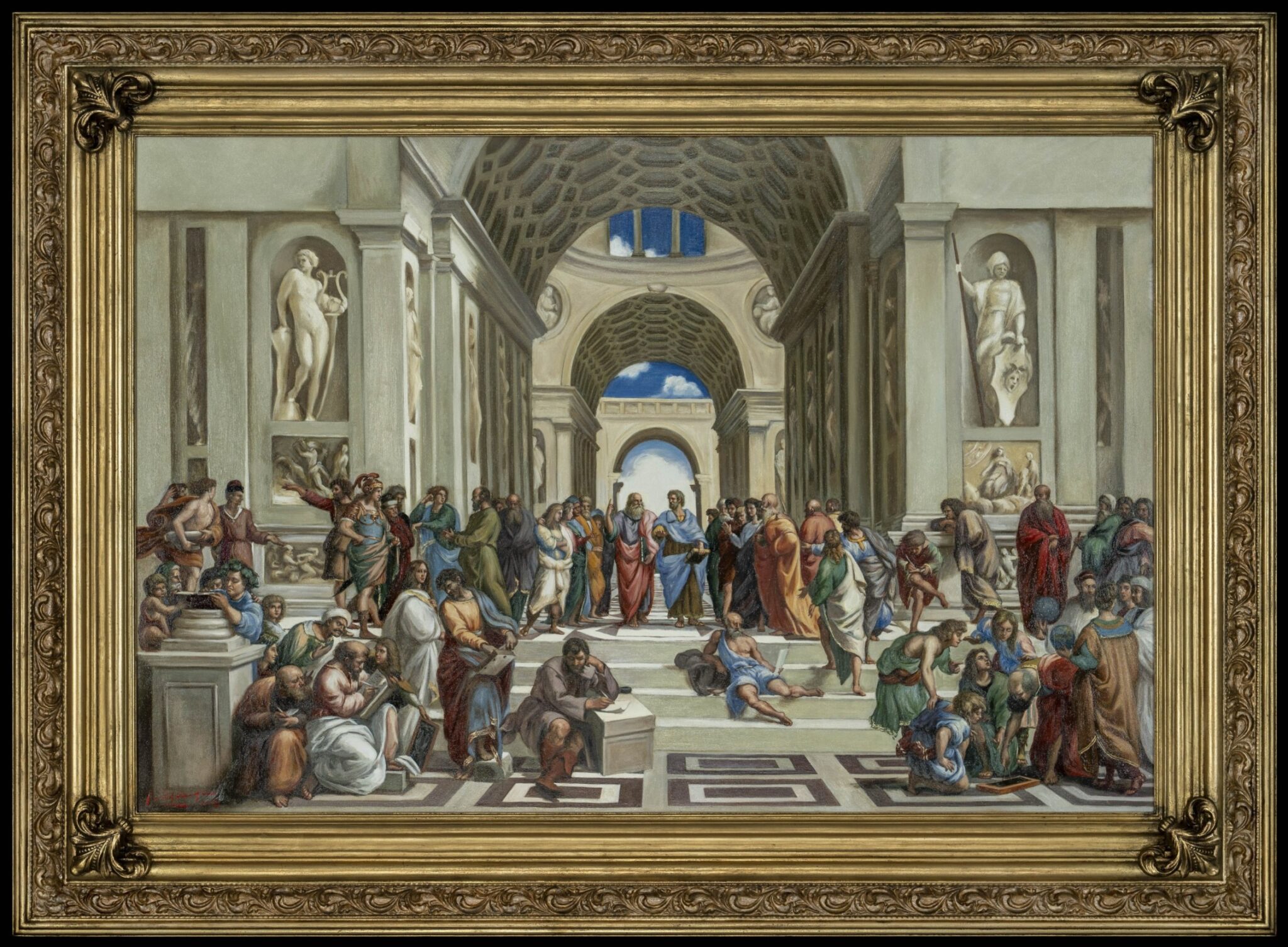
Zeno
Averroes
Ae Schines
Anti SCHENES
Socrates
Epicurus
Anaximander
Anaxagoras
Pythagoras
Hypatia
Parmenides
Heraclitus
Diogenes
Plato
Ari Stotle
Peripa Technics
Plotinus
Zoroaster
Euclid
Ptolemy