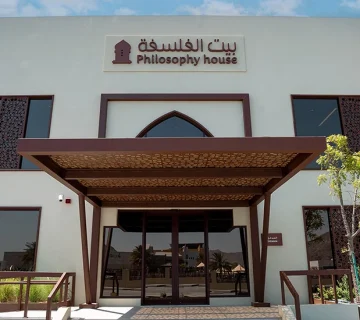
The International Philosophy Summit: “Coexistence and Dialogue Among Nations”
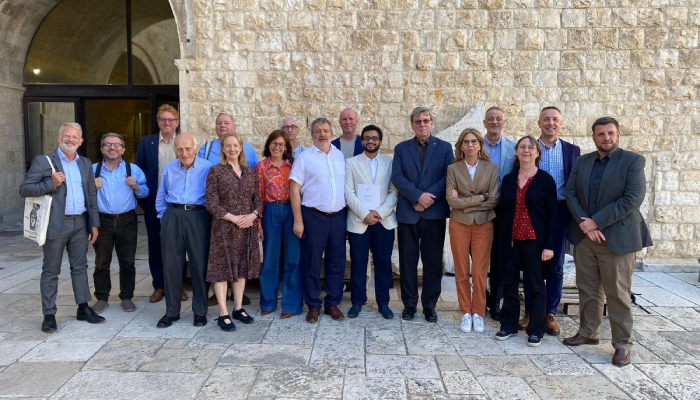
Group of Seven 2024
Barletta, Italy May 23-24, 2024
A Statement on Philosophy and Interculturality:
In a world filled with many accelerating challenges and increasing opportunities for growth, there is an urgent need for serious philosophical visions and responses. Increasing poverty, insecurity, diminishing freedoms, and the spread of conflicts require us to seek new patterns of coexistence.
Philosophy:
Philosophy provides unique resources in a rapidly globalizing world. It examines the underlying assumptions and principles of our various practices and theories, and has always flourished and developed through dialogue—or rather, multilateral dialogue—between different perspectives. It is thus uniquely positioned to encourage thinking from different angles and about different visions.
Philosophy has sometimes led to the entrenchment of strong convictions and rigid ideologies. Philosophers have also sometimes failed to recognize the diversity and differences between languages and traditions. Nevertheless, as a branch of reflective knowledge, philosophy is capable of identifying hypotheses and presuppositions and of addressing issues of concern to people and peoples beyond academia. Its texts and traditions have passed from culture to culture, from language to language, and it recognizes the need to study and learn in the original languages of their authors.
Philosophical thinking encourages civic and democratic participation and helps develop the knowledge and skills necessary to listen, express, and communicate effectively. The intellectual and cultural exchange that characterizes philosophy has played, and continues to play, an important role in promoting dialogue among civilizations and coexistence.
The State of Philosophy Today:
Philosophy has played a major role in academia around the world, although this role has evolved in various ways over the centuries. However, academic philosophy in Europe and the English-speaking world has become increasingly Eurocentric, and this has been partly replicated elsewhere in the world as a result of European expansion, colonialism, and globalization.
Universities have gradually begun to wake up to this, realizing the need to expand the scope of philosophy programs and diversify their curricula. However, they constantly encounter many significant cultural, structural, and institutional obstacles to overcoming these problems. These obstacles arise from imbalances and asymmetries in university systems, as well as from broader imbalances represented by social, political, economic, and ideological constraints.
Universities play a powerful role in determining academic programs and curricula and in setting educational and research agendas. They do this in response to social or political needs, financial constraints, and cultural trends. This inevitably results in the inclusion of some topics, characters, narratives, and approaches at the expense of others. This marginalizes the contributions of women or those from certain regions, for example. The works of female and feminist philosophers are often absent from academic curricula, even today. Women are also underrepresented in many philosophy departments, and ethnic identities are noticeably absent from the academic field. As a result, philosophical thinking loses important issues and perspectives that could have provided a qualitative contribution.
This loss is exacerbated by the increasing dominance of English as the global academic language. This has devalued philosophical thinking in other languages, narrowing the scope of discourse in terms of conceptual resources, content, methods, and perspectives. Taking linguistic diversity seriously is vital for genuine philosophical dialogue between civilizations.
Intercultural Approaches:
Our world today faces major environmental, social, political, and technological challenges that threaten the future of all life forms. These challenges require coordinated efforts from all countries and societies to respond effectively and engage in constructive dialogue, based on a genuine understanding of the perspectives of others.
Developing an active multicultural orientation within philosophical thinking, and in the humanities more generally, will enable us to address problems of exclusion and the absence of diversity. [In this context], one of the most effective basic philosophical skills is the ability to think from the perspective of others. This involves understanding and critically examining ideas and problems from different perspectives. The more this can be done, the less fear of difference can be reduced. This ability to think from the perspective of others is indispensable, particularly in developing the democratic attitudes that provide the foundation for a pluralistic society.
A call for true coexistence:
The term “coexistence”—in keeping with its linguistic origins—seeks patterns of shared action that transcend differences and embrace diversity and cultural pluralism. It resonates across many philosophical traditions, embracing the coexistence, on a global level, of different, and sometimes radically opposing, ways of thinking and multiple modes of identifying with the world. How we bring these things together and open respectful avenues for seeking to understand each other is crucial.
The concept of coexistence has sometimes been criticized for not paying enough attention to disagreement and difference. However, our proposal is to overcome this criticism by mobilizing philosophy’s immersion in debate, working through and across different perspectives, to genuinely develop the concept of coexistence. By this, we mean a new form of philosophical thinking that radically emphasizes interdependence and places deep engagement with the ideas of others at the core of its vision. By encouraging broad dialogue across existing borders—and celebrating the creation of new intellectual spaces of communication—we can develop new concepts, revive old ones, and repurpose them for peaceful and sustainable living together.
Action Plan:
The following action points are proposed to promote coexistence, the value and practice of philosophy, and intercultural approaches:
1- Expressing a strong commitment to expanding the scope of philosophical and humanistic education, especially among younger generations across different levels of education, with an emphasis on continuity between secondary and higher education, and on expanding the presence of philosophy in public life.
The benefit of this process is that philosophy and the humanities contribute in a unique and important way to (a) personal growth and social cohesion; (b) communication and coexistence between cultures; (c) resilience and well-being; (d) the purposeful use of digital technology and artificial intelligence, and a philosophical view of their limits and possibilities; (e) the promotion of peace, the development of active citizenship, and the sustainability of democracy.
2- Ensure that borders do not hinder coexistence, intercultural dialogue, and academic exchange. Universities and academic institutions must be recognized as places of refuge and supported with adequate resources.
Philosophy, as a discipline concerned with fundamental questions of humanity, is studied and practiced across borders and has been enriched throughout its history by intercultural exchange. Visa restrictions are an obstacle to all of this. Therefore, the growing logic that transforms borders into hotbeds of exclusion, violence, and dehumanization must be resisted and condemned.
3. Take action to respect and protect academic freedom, eliminate censorship, intimidation, and persecution, and promote and facilitate academic growth, mobility, and exchange.
4. Address structural and material deficiencies to facilitate participation in the global academic community.
5. Strengthening academic networks of philosophers through multi-level action, including: (a) Supporting existing philosophical institutions in universities and research bodies; (b) Promoting philosophical dialogue across different regions of the world; (c) Increasing and expanding student and scholarly exchanges, with particular attention to South-South, East-West, and North-South mobility; (d) Maintaining and communicating philosophical research through scholarly and other outreach initiatives; (e) Preparing for regular high-level philosophical meetings, including in the context of the G7 and in connection with the World Philosophy Congress.
Barletta, May 24, 2024
- Maurice Aymard
- Graduate School of Social Sciences, Dar Al-Ulum al-Hummus Foundation
- Michael Penney
- University of Aberdeen
- Marinza Benedetto
- Aldo Moro University of Paris
- Mario De Caro
- Roma Tre University
- Jean-Paul De Luca
- University of Il-Ta Malta
- Philippe Dörstwitz
- American University of Ras Al Khaimah
- Philosophy House in Fujairah
- Rolf Elberfeld
- University of Hildesheim
- Fabrizia Giuliani
- Sapienza University of Rome
- Anke Granis
- University of Hildesheim
- Sharon MacDonald
- Humboldt University of Berlin
- Mikhail Minakov
- Kenan Institute/Wilson Center
- Paolo Ponzio
- Aldo Moro University of Paris
- Ahmed Elsamahi
- House of Philosophy in Fujairah
- Luca Maria Scarantino
- Aldo Moro University of Paris
- Chairman of the 25th World Philosophy Congress
- Emideo Spinelli
- Sapienza University of Rome
- William Sweet
- Saint Francis Xavier University
- Brian Van Norden
- Vassar College